In Memoriam: Tahar Haddad
By Tunez Magazine ·
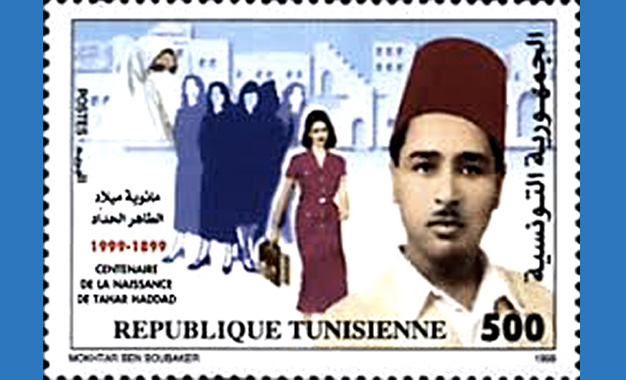
Tahar Haddad was a Tunisian writer who trained in Islamic law. He became one of the most controversial public intellectuals of the French Protectorate period. Rather than treating social reform as a matter of etiquette or gradual change, he approached it through critical inquiry and rigorous argument.
Born in Tunis in 1899, Haddad studied at the Zitouna institution and completed his education in 1920. His training gave him the legal vocabulary and interpretive methods that shaped his later work. This background helps explain his ideas. Haddad did not criticize religious reasoning as an outsider. Instead, he argued that historical circumstances shaped religious interpretation. He therefore believed that people could question, revise, and evaluate interpretations on moral grounds.
National Liberation and the Social Question
Haddad entered adulthood during a period of growing resistance to colonial rule and intense debate about Tunisia’s future. Public discussions addressed political representation, education, labor, and the family. He joined the nationalist movement but also insisted that Tunisians could not separate social reform from the struggle for independence.
Haddad’s writings on labor examined worker exploitation and the organization of workers under colonial capitalism. He viewed collective action as a central element of political life, not merely an economic concern. This perspective expanded the scope of nationalist debate. For Haddad, workers’ dignity and labor rights demanded immediate attention. Tunisians could not postpone these questions until after national liberation. He saw them as fundamental issues of justice, social equality, and political authority.
Muslim Women in Law and Society: A Contested Vision of Reform
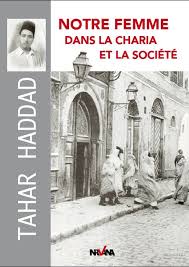
In 1930, Tahar Haddad published his most famous and controversial book, commonly known in English as Muslim Women in Law and Society. The work examined women’s status through legal analysis and an account of social conditions.
Haddad did not simply oppose religion to modernity. Instead, he questioned whether existing social practices were necessarily dictated by religion. He distinguished between foundational religious principles and legal interpretations shaped by historical circumstances. He also examined how education, economic dependence, and marriage practices reinforced inequality.
For Haddad, certain interpretations had become accepted as unquestionable social truths. He argued that this process had consequences for women’s freedom and for the legitimacy of legal authority itself. His approach challenged readers to reconsider inherited answers. It also raised a fundamental question: could moral responsibility be separated from the responsibility to interpret?
The book provoked a strong backlash. Religious authorities and influential public figures denounced Haddad. Historical accounts describe a campaign to discredit him, followed by his marginalization and social isolation. The controversy did more than damage his reputation. It restricted his participation in public life and shaped his final years, leaving him increasingly excluded from the institutions and debates he had sought to influence.
A Legacy Beyond His Lifetime
Tahar Haddad died in 1935, aged thirty-five. Although his published body of work was relatively small, its influence extended well beyond his lifetime.
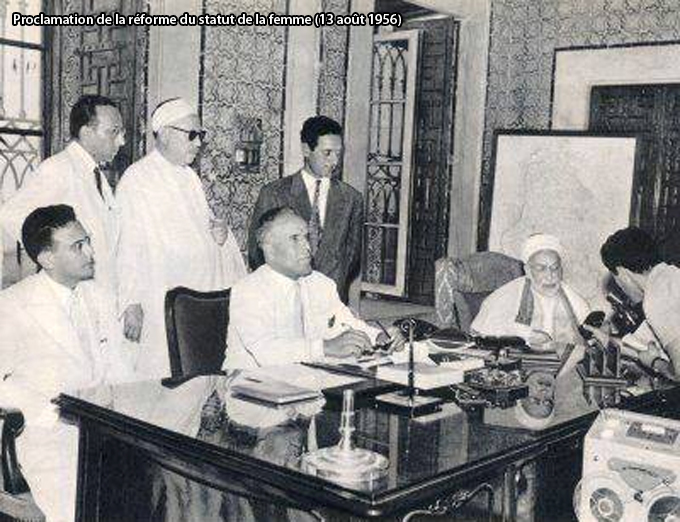
Following Tunisia’s independence, Haddad’s reputation was increasingly rehabilitated in public discourse and scholarship. His ideas were revisited in debates about women’s legal status and the possibilities of social reform. His legacy, however, should not be understood as the sole cause of subsequent legal changes. Such transformations emerge from institutions, political struggles, and evolving social practices, rather than from the ideas of a single individual.
Nevertheless, Haddad’s lasting significance lies in his approach to social transformation. He sought to challenge established inequalities without abandoning the language of law and ethics through which authority justified itself in Tunisian society.
His intellectual position brought together several questions that were often treated separately: anticolonial politics, workers’ rights, and women’s emancipation. He understood social life as a space in which authority had to justify its claims rather than rely solely on inherited legitimacy.
Haddad’s legacy therefore extends beyond the controversies of his own time. It lies in his insistence that interpretation carries responsibility, and that neither legal tradition nor social custom should be exempt from critical examination.