Mongi Slim: The Tunisian Diplomat Who Took a Young Nation to the World Stage
By Tunez Magazine ·
Born in Tunis in 1908, Mongi Slim was among the figures whose political careers connected Tunisia’s independence movement with the emerging international order of the twentieth century. Educated at Sadiki College in Tunis and Lycée Carnot, he pursued further studies in Paris, where he studied law. His education prepared him for a career in legal practice, but the political question of Tunisia’s future would ultimately define his life.
Mongi Slim joined the nationalist Neo-Destour movement in 1936, working alongside figures including Habib Bourguiba. By 1937, he had become secretary of the party’s national council, placing him among the movement’s important organizers at a time when demands for greater political representation were intensifying across the French Protectorate of Tunisia.
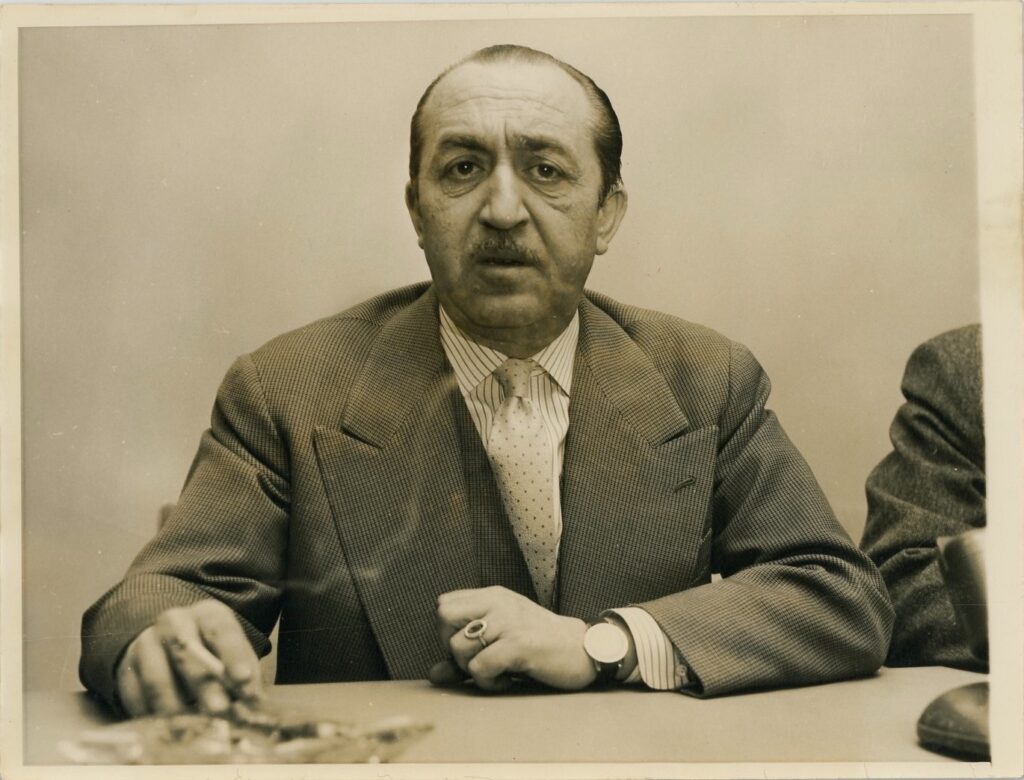
On 8 April 1938, Mongi Slim led a demonstration calling for a Tunisian parliament. The protest became part of the confrontation between the nationalist movement and the colonial authorities. The following day, he was arrested during the repression that became commemorated in Tunisia as Martyrs’ Day.
His imprisonment took him to Fort Saint-Nicolas in Marseille, where he was detained alongside Habib Bourguiba and other nationalist leaders. Released in 1943, Mongi Slim returned to political activity and continued working for the nationalist cause. Another arrest in 1952, followed by detention and restrictions on his movements, reinforced the personal cost of his commitment to independence.
The negotiator behind a turning point
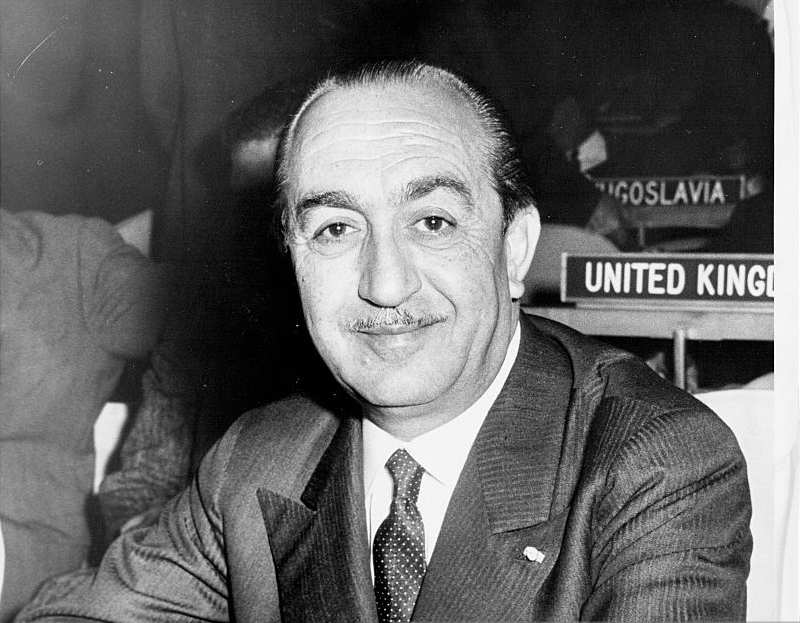
By the early 1950s, the struggle for independence was increasingly being fought through both political mobilization and negotiations. Mongi Slim’s legal training, experience within Neo-Destour and familiarity with the nationalist leadership positioned him to take on a central diplomatic role.
In 1954, Mongi Slim became head of the Tunisian delegation to negotiations with France. The discussions led to agreements on internal autonomy in 1955, an important stage in the process that culminated in Tunisia’s independence on 20 March 1956. He subsequently served as minister of the interior, participating in the difficult transition from colonial administration to independent statehood.
Independence changed the nature of the challenge facing Tunisia. The country now needed to establish its institutions, defend its sovereignty and develop relationships with governments beyond its borders. Its independence had to be translated into diplomatic recognition and a meaningful voice in international affairs.
Mongi Slim became one of the people tasked with that work. In 1956, he was appointed to represent Tunisia in Washington and Canada and served as the country’s permanent representative to the United Nations. He was no longer working only to secure independence; he was helping establish what Tunisia would do with it.
Building Tunisia’s international presence
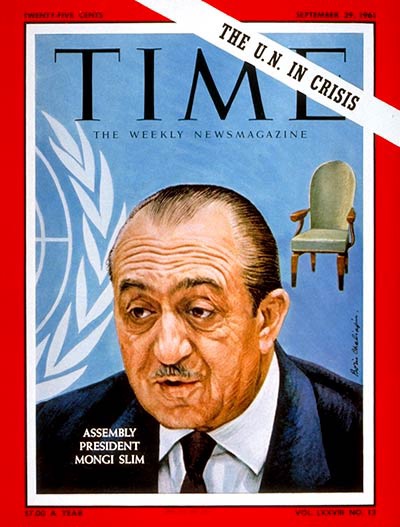
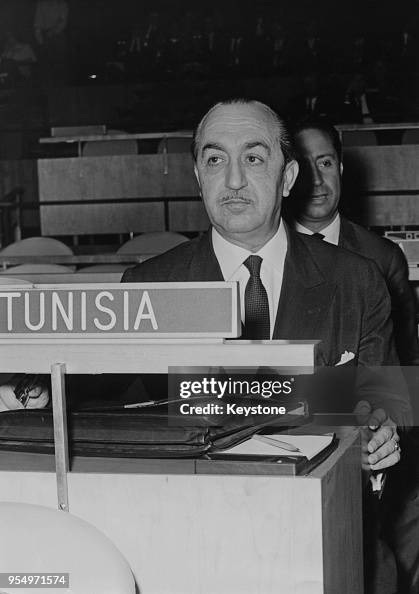
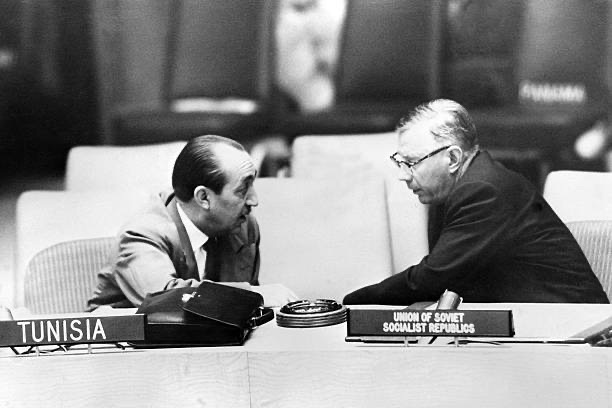
Mongi Slim’s diplomatic career developed during a period when newly independent countries were seeking a greater role in institutions historically dominated by established powers. Tunisia joined the United Nations in 1956, and Mongi Slim became a familiar figure at the General Assembly, representing the country at successive sessions.
He served as Tunisia’s representative on the Security Council from January 1959 to December 1960. His work also involved questions concerning Hungary, international disarmament, the Congo crisis and the wider struggle against colonial rule. He became known as a negotiator who combined political firmness with the ability to work across diplomatic divisions.
For Tunisia, this work carried significance beyond the diplomatic career of an individual. A country that had only recently emerged from colonial rule was taking part in discussions about international security, sovereignty and the future of other territories seeking freedom.
Mongi Slim’s international role was also closely connected to events at home. In 1961, the Bizerte crisis brought Tunisia’s sovereignty into sharp focus. French forces remained in Tunisia after independence, and the confrontation at Bizerte in July resulted in an international dispute that was brought before the United Nations. During the General Assembly’s third special session in August 1961, delegates debated the presence of French forces and the question of their withdrawal. A resolution calling for peaceful negotiations was adopted on 25 August.
The crisis demonstrated why international representation mattered. Independence had been formally achieved, but defending the new state’s sovereignty required sustained political and diplomatic action.
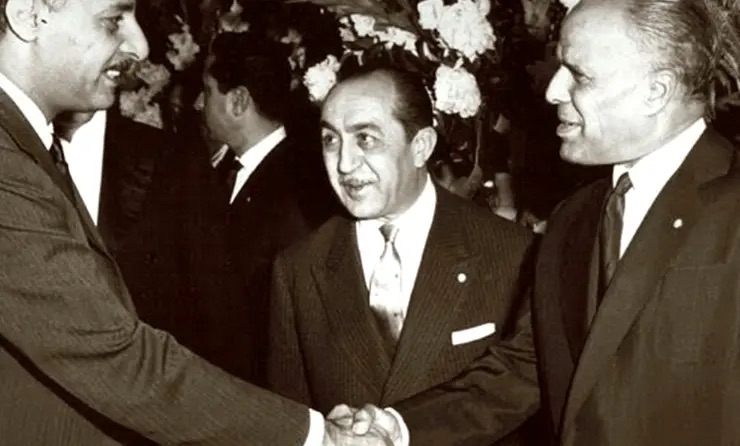
A historic presidency at the United Nations
In September 1961, Mongi Slim was elected president of the sixteenth session of the United Nations General Assembly. He became the first African, first African Francophone and first North African to hold the position. His election took place only five years after Tunisia had joined the United Nations, making the achievement particularly significant for a young state still establishing its international standing.
His presidency coincided with a turbulent moment in international affairs. Secretary-General Dag Hammarskjöld had died in September 1961, and the United Nations was confronting questions involving decolonization, racial discrimination, the Congo and Cold War tensions.
Mongi Slim presided over the General Assembly as representatives from countries with competing interests debated some of the era’s most consequential issues. His diplomatic experience was essential to a role that required maintaining the work of a diverse assembly while navigating disagreement among its members.
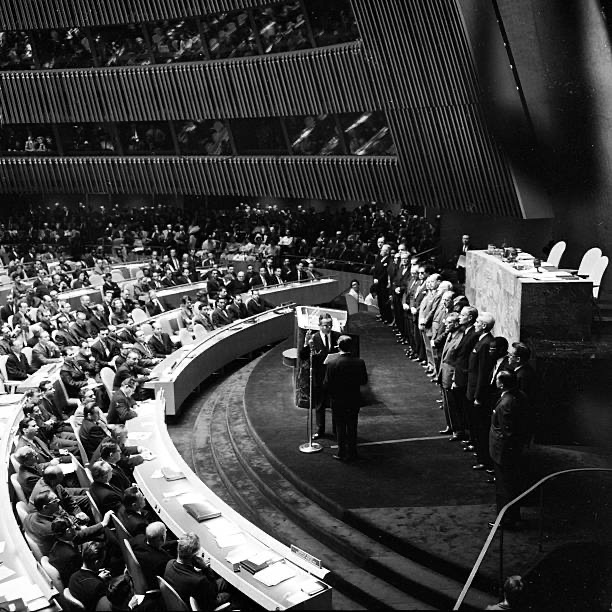
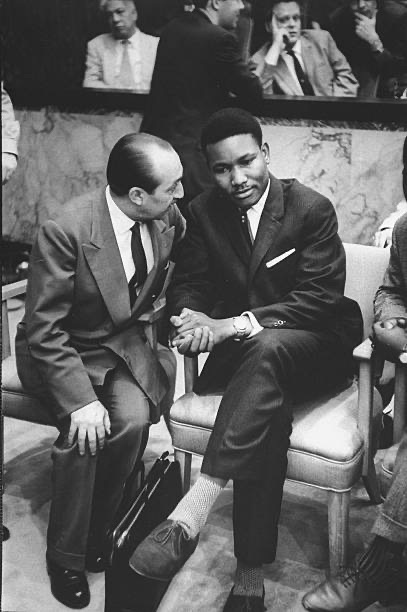
His rise also reflected a wider historical change: countries emerging from colonial rule were claiming positions within international institutions and helping shape their debates.
The presidency was not the same as serving as UN secretary-general. Its importance lay in presiding over the Assembly and its deliberations. For Tunisia, however, the symbolism was unmistakable. A diplomat from a recently independent North African country was chairing the principal deliberative body of the United Nations at a time when the international system itself was being transformed by decolonization.
From international diplomacy back to Tunis
After his presidency, Mongi Slim returned to Tunisian government service. He became minister of foreign affairs in 1962 and held the position until 1964. He later served as the personal representative of President Habib Bourguiba and, in 1966, became secretary of state for justice, remaining in office until his death.
Mongi Slim died in Tunis on 23 October 1969, aged 61. His career had encompassed political activism, imprisonment, independence negotiations, diplomatic representation and senior government responsibilities. He had witnessed Tunisia move from a territory under a French protectorate to an independent country participating in international decision-making.
A legacy beyond the diplomatic record
Mongi Slim’s place in Tunisian history cannot be understood solely through the offices he occupied. His story began in the nationalist movement, passed through years of imprisonment and negotiation, and continued into the diplomatic institutions where Tunisia sought to defend its sovereignty and define its international relationships.
His presidency of the United Nations General Assembly remains a landmark in the history of African representation. It placed a Tunisian diplomat at the head of an institution whose membership and political importance were changing rapidly as more countries gained independence.
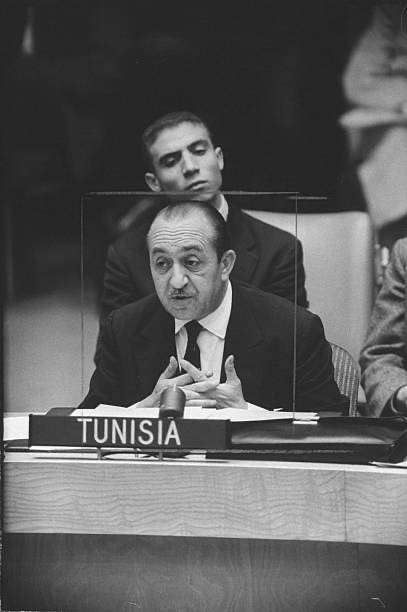
Yet the significance of Mongi Slim’s career extends beyond the distinction of being the first African to hold that office. His life illustrates the connection between national liberation and international diplomacy: political independence created a country, but diplomacy helped establish its voice.
Remembering Mongi Slim means remembering a period when Tunisia was not only fighting to determine its own future, but also beginning to take part in shaping a changing world.