The Tunisian National Dialogue Quartet
By Tunez Magazine ·
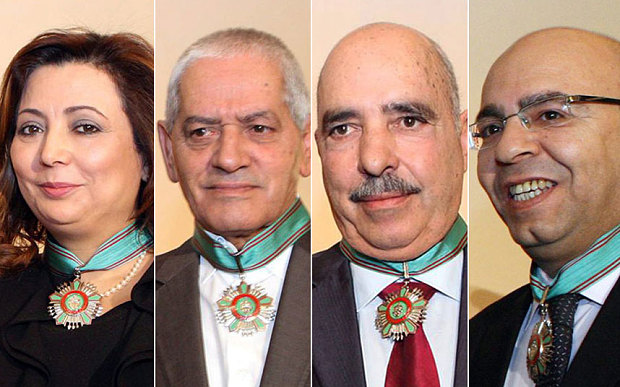
The Tunisian National Dialogue Quartet is a coalition of four civil society organizations that helped Tunisia overcome a major political crisis following the 2011 revolution. Formed in 2013, it brought together the Tunisian General Labour Union (UGTT), the Tunisian Confederation of Industry, Trade and Handicrafts (UTICA), the Tunisian Human Rights League (LTDH), and the Tunisian Order of Lawyers.
The four organizations mediated negotiations between rival political parties during a period of growing instability. Their efforts helped keep Tunisia’s democratic transition on track, leading to the adoption of a new constitution in 2014. In recognition of their contribution to peaceful political dialogue and democratic development, the Quartet was awarded the 2015 Nobel Peace Prize.
Background
After the Jasmine Revolution of 2011 ended President Zine El Abidine Ben Ali’s 23-year rule, Tunisia began its transition to democracy. The country held its first free elections, bringing the Ennahda Movement to power as the leading party in a coalition government.
By 2013, however, political tensions had intensified. Disagreements over the new constitution, economic hardship, and the assassinations of secular politicians Chokri Belaïd and Mohamed Brahmi deepened the crisis. Tunisia’s democratic transition was at risk, raising fears of further instability across the country.
Civil society stepped in to help prevent the political process from collapsing. Tunisia had a long tradition of activism and organized civic engagement. The Tunisian General Labour Union (UGTT) took the lead in bringing rival political groups to the negotiating table.
Three other organizations joined the effort: UTICA, which represents businesses; the Tunisian Human Rights League (LTDH); and the Tunisian Order of Lawyers. Together, they formed the Tunisian National Dialogue Quartet in 2013.
Formation and Composition
The Tunisian National Dialogue Quartet brought together four organizations representing different parts of society. Each contributed its own experience and influence.
UGTT (Tunisian General Labour Union): Founded in 1946, UGTT has played a major role in Tunisia’s social and political life. Its work extends beyond labour rights to include national dialogue and political advocacy.
UTICA (Tunisian Union of Industry, Trade and Handicrafts): Established in 1947, UTICA represents Tunisia’s private sector. It advocates for businesses and contributes to discussions about economic development.
LTDH (Tunisian Human Rights League): Founded in 1976, LTDH was the first independent human rights league in Africa and the Arab world. It has worked to defend civil liberties and monitor human rights conditions.
Tunisian Order of Lawyers: This professional body represents the country’s lawyers. It has also contributed to efforts to protect judicial independence and uphold the rule of law.
Together, these four organizations represented labour, business, human rights, and the legal profession. Their broad social base helped establish the Quartet as a credible mediator between opposing political parties.
The National Dialogue Process
The Quartet launched a series of negotiations known as the National Dialogue. Its goal was to resolve the political crisis and keep Tunisia’s democratic transition on track.
On 17 September 2013, the Quartet presented a roadmap to the country’s political parties. It set out three main priorities:
- Forming a neutral government: A technocratic administration would take over until new elections could be held.
- Completing the constitution: Political parties would work towards finalising the new constitution.
- Setting an election timetable: Parliamentary and presidential elections would take place within an agreed timeframe.
Negotiations were difficult, and several political factions initially resisted the proposals. However, the Quartet continued its mediation efforts. The National Dialogue formally began in October 2013.
In January 2014, Tunisia adopted a new constitution. The document established a framework for democratic governance and included important protections for rights and freedoms. It became a key milestone in the country’s political transition.
Achievements and Outcomes
The Tunisian National Dialogue Quartet played a central role in helping the country overcome the 2013 political crisis. Its mediation contributed to several important developments.
Adoption of the 2014 Constitution: Tunisia adopted a new constitution in January 2014. It established democratic institutions and protected fundamental rights, including freedom of expression and equality before the law.
Formation of a Technocratic Government: Mehdi Jomaa became head of a non-partisan government. Its task was to guide the country towards elections and help restore political stability.
Successful 2014 Elections: Tunisia held parliamentary and presidential elections in 2014. These polls marked an important step towards establishing elected institutions under the new constitutional framework.
The 2015 Nobel Peace Prize: The Quartet received the Nobel Peace Prize in 2015 for its decisive contribution to building a pluralistic democracy in Tunisia. The Norwegian Nobel Committee recognised the role of civil society in helping resolve the political crisis through peaceful dialogue.
A Landmark in Tunisia’s Democratic Transition
The Tunisian National Dialogue Quartet demonstrated how civil society organizations could help resolve a major political crisis through negotiation. Rather than allowing rival factions to move further apart, the four organizations created a framework for dialogue and compromise.
Its achievement was rooted in Tunisia’s own institutions, civic networks, and history of organized activism. The Quartet’s work became an internationally recognised example of domestic mediation and peaceful conflict resolution.
Although Tunisia’s democratic transition would face further challenges, the Quartet’s intervention remains a significant chapter in the country’s modern history. It showed how dialogue, cooperation, and civic engagement could help prevent a political crisis from derailing an entire national transition.
The Nobel Peace Prize
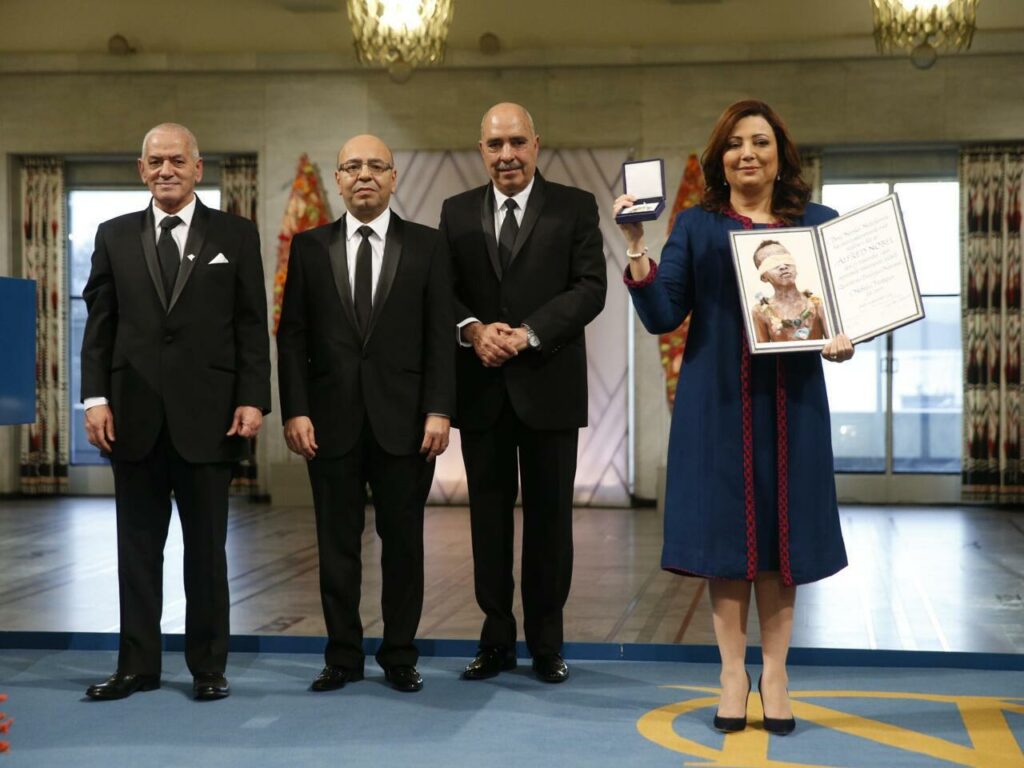
On 9 October 2015, the Norwegian Nobel Committee awarded the Nobel Peace Prize to the Tunisian National Dialogue Quartet. The award recognised its decisive contribution to building a pluralistic democracy in Tunisia following the Jasmine Revolution.
The Quartet helped bring rival political parties together during a period of deep division. Its mediation supported a peaceful political transition and demonstrated the important role civil society can play in resolving national crises.
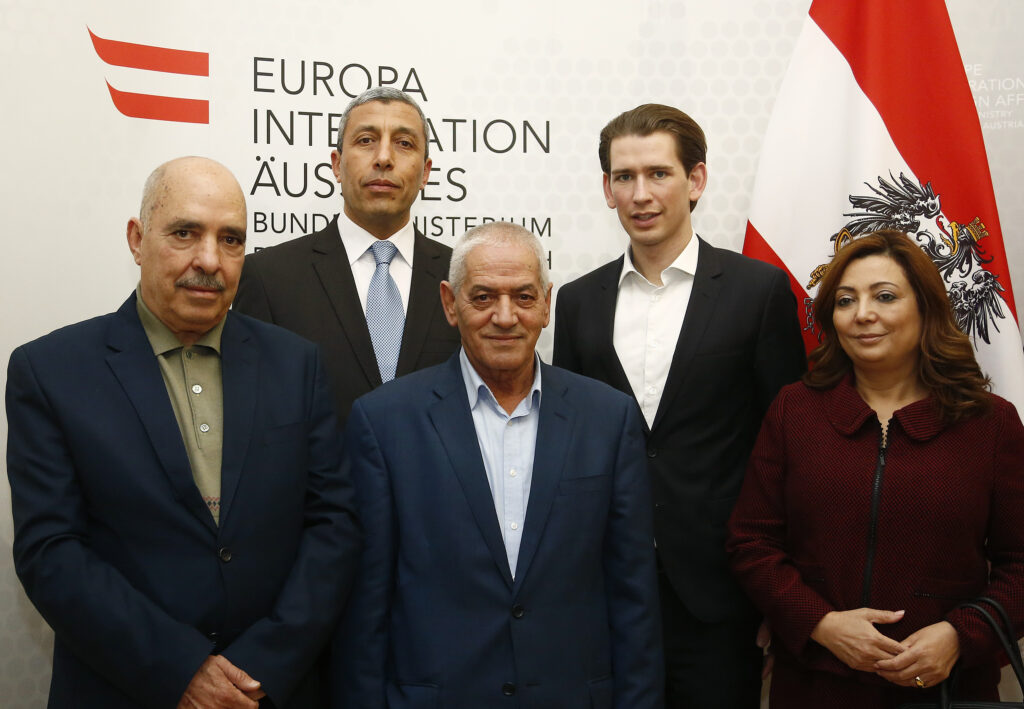
The prize was awarded to four representatives: Houcine Abassi of UGTT, Wided Bouchamaoui of UTICA, Abdessattar Ben Moussa of LTDH, and Mohamed Fadhel Mahfoudh of the Tunisian Order of Lawyers. They received the award in Oslo, bringing international attention to Tunisia’s efforts to resolve political conflict through dialogue.
Legacy and Impact
The Quartet’s work has become an important example of civil society mediation. Its experience continues to inform discussions about democratic transitions, political compromise, and peaceful conflict resolution.
Several factors helped the initiative gain credibility. Tunisia had established civil society organizations with deep roots in public life. Each member of the Quartet also represented a different sector, from workers and businesses to human rights advocates and legal professionals. This diversity helped the group engage with opposing political forces.
However, Tunisia’s democratic transition has faced significant challenges. Economic difficulties, political divisions, and public frustration have tested confidence in democratic institutions. The country’s political developments since 2021 have also raised concerns about democratic backsliding.
Despite these setbacks, the Quartet’s role in the 2013 crisis remains a significant moment in Tunisia’s modern history. Its experience illustrates how dialogue and cooperation can help prevent political tensions from escalating.
Challenges and Criticisms
Although the Quartet helped resolve an immediate political crisis, its approach also attracted criticism. Some observers argue that the negotiations were largely led by political and institutional elites, leaving ordinary citizens with limited direct involvement.
Others point out that the dialogue did not resolve deeper economic and social problems. Youth unemployment, regional inequality, and persistent economic hardship continued to affect Tunisia after the transition.
These challenges highlight an important distinction: reaching a political agreement can help stabilise a country, but it does not automatically solve its structural problems. Tunisia’s subsequent political developments have also shown that democratic institutions require continued public participation and protection.
International Influence
The Tunisian National Dialogue Quartet attracted international attention as an example of locally led conflict mediation. Its experience demonstrated how established civil society organizations could bring competing political groups to the negotiating table without relying on direct foreign intervention.
The Quartet’s achievement has contributed to wider discussions about dialogue, institutional cooperation, and peaceful political transitions. Its approach highlights the importance of trust, representation, and shared responsibility when societies face deep political divisions.
For Tunisia, the Nobel Peace Prize recognised a specific achievement during a critical period. The Quartet helped the country move away from confrontation and towards negotiation, leaving a lasting mark on its political history.