Did The Beatles Ever Come to Tunisia?
By Tunez Magazine ·
Yes, they came, but not like this, and perhaps not all of them.
For years, a photograph claiming to show The Beatles in Tunisia has circulated online. Its popularity grew in the late 2010s, especially on Facebook, nostalgic forums and regional social media groups. Captions often pointed to road signs for Algiers, Casablanca or El Kef. However, the image rarely came with any reliable context. Despite this, many posts presented the claim as fact.
The photograph has since become part of online folklore. Yet it does not show The Beatles, and no verified historical evidence confirms that all four members visited Tunisia together.
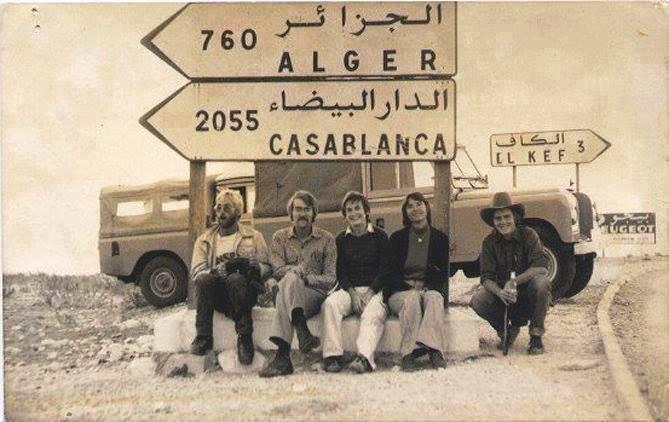
The confusion is understandable. The Beatles remain among the most mythologised figures in modern culture. Their travels, public appearances and private lives have been documented and romanticised for decades. So, when an evocative vintage photograph appears to place them somewhere unexpected, curiosity can outweigh the need for verification. The story feels exciting, forgotten and almost secret. However, an appealing story is not necessarily a historical fact.
A different account suggests that Paul McCartney travelled to Tunisia alone from the band in February 1965, accompanied by his then-partner, Jane Asher. This story appears in biographies, fan archives and music history websites. However, many accounts offer little primary evidence, such as travel records, contemporary press reports or official correspondence.
According to these secondary sources, McCartney wanted a break from the intense attention surrounding Beatlemania. Tunisia, particularly Hammamet, reportedly offered the privacy and tranquillity he sought.
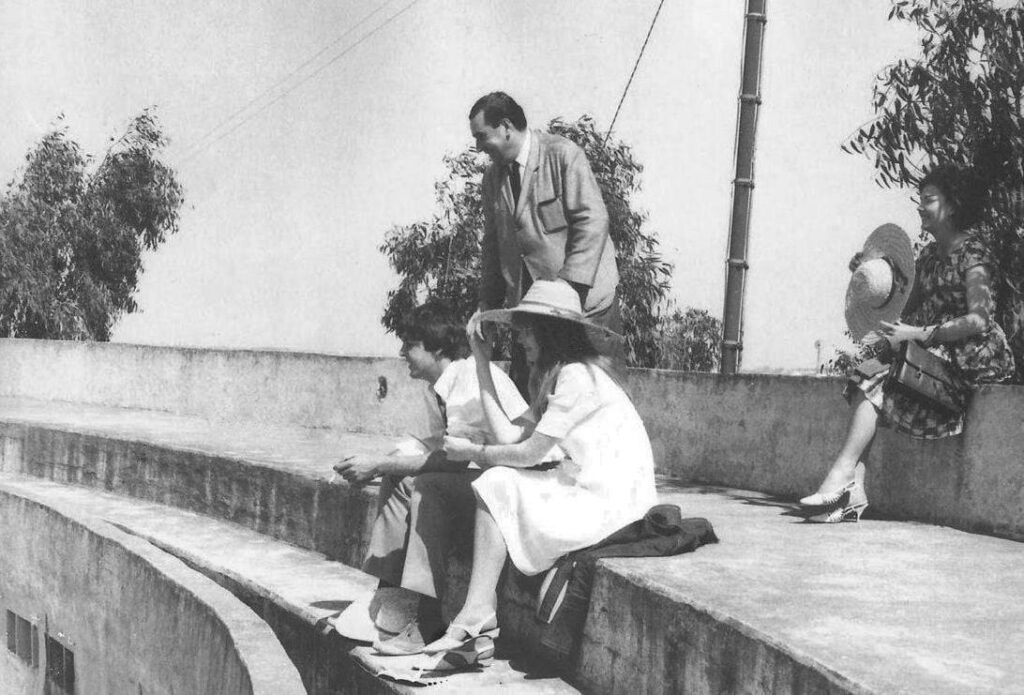
If the visit took place, it was neither a concert nor an official appearance. Instead, it was reportedly a private retreat. According to some accounts, the couple stayed in a secluded villa linked to diplomatic circles. They walked along the coast and avoided public attention.
During this stay, McCartney is said to have started working on Another Girl. The song was later recorded for the Beatles’ album Help! after his return to England. This connection appears frequently in online accounts. It gives Tunisia a possible place in Beatles history, not as a performance venue, but as a setting for creative solitude. However, the link remains circumstantial. Repeated claims have not replaced the need for definitive evidence.
The viral photograph tells a different story. Its appeal comes from ambiguity. The figures resemble musicians, while the setting feels cinematic. Road signs add a sense of youth, movement and escape. Once the image was labeled The Beatles in Tunisia, many viewers accepted the claim without questioning it. Repetition gradually replaced verification. As a result, widespread circulation began to look like proof.
Social media accelerated this process. With every repost, the original uncertainty became less visible. Familiarity eventually took the place of evidence. Later, some users began questioning the photograph. They pointed to differences in facial features and problems with the proposed chronology. More importantly, no reliable historical records support the claim that all four Beatles visited Tunisia together.
If McCartney’s reported visit did happen, the reality was probably far less dramatic. He would not have arrived as an international icon seeking attention, but perhaps as a young musician looking for peace and privacy. Tunisia may have played a small role in Beatles history, although that possibility remains unconfirmed. Such moments can be difficult to document. They are also more human than the fantasies that often surround famous musicians.
The Beatles did not visit Tunisia together, and the circulating photograph does not depict them. Even Paul McCartney’s reported presence rests on indirect accounts rather than definitive archival evidence.
Yet this uncertainty raises an important question about how history survives. Not every story comes with clear documentation. Some remain as fragments, rumours or possibilities that cannot be fully verified. In these cases, acknowledging what we do not know matters more than turning an intriguing story into an established fact.