Nomad Man!
By Tunez Magazine ·
Nomad Man takes place once a year over three days and three nights. The 2026 edition was scheduled for 30 January to 2 February in the Sahara of southern Tunisia. The gathering is held at Tiniri Camp, in the Grand Erg Oriental, several hours south of Douz. Reaching the site requires coordinated desert transport.
Its remote location and limited duration make Nomad Man a time-specific experience rather than a destination visitors can access at any time. Participation also depends on the event’s arrangements. For those interested in cultural practices, communal living and the Sahara’s demanding environment, the gathering offers a rare opportunity to experience these elements together over a defined period.
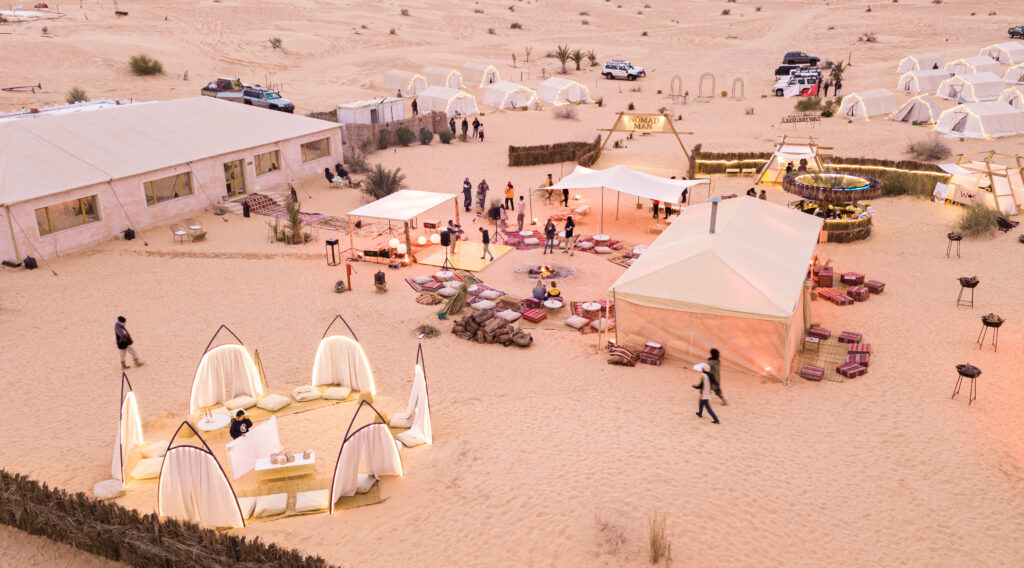
Nomad Man is a temporary cultural gathering in the Sahara of southern Tunisia, near Douz. The event offers a selective, small-scale experience that unfolds over three days and three nights in a remote environment. Rather than following the format of a conventional festival, it brings together artistic practices, wellness activities and communal living. These experiences are shaped by the conditions of the desert. The gathering treats isolation and environmental challenges as opportunities for cultural exchange and social experimentation.
The location plays a central role in shaping the experience. Known as Tiniri Camp, the site lies deep within the Grand Erg Oriental. Reaching it requires a long road journey, followed by guided four-wheel-drive travel across the sand dunes. This journey gradually separates participants from urban life and familiar surroundings. The lack of mobile network coverage further strengthens that sense of disconnection. As a result, people rely more on direct interaction and shared experiences.
In this setting, the desert is more than a backdrop. Its vastness, isolation and physical demands influence how participants move, interact and experience their surroundings. The landscape becomes an active part of the gathering, shaping both its social dynamics and its cultural character.
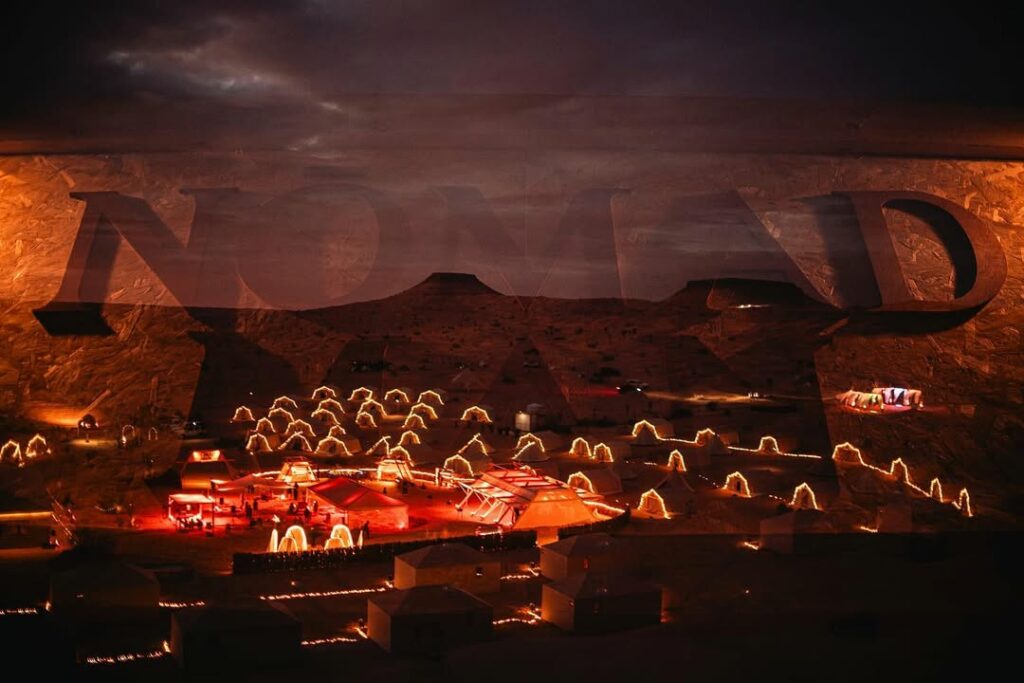
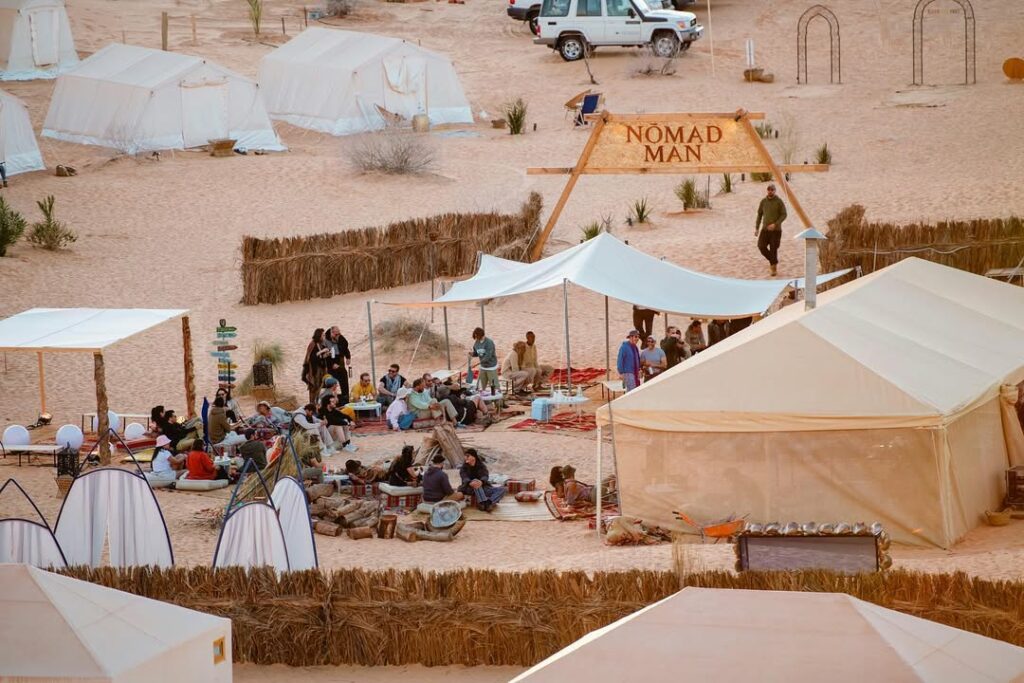
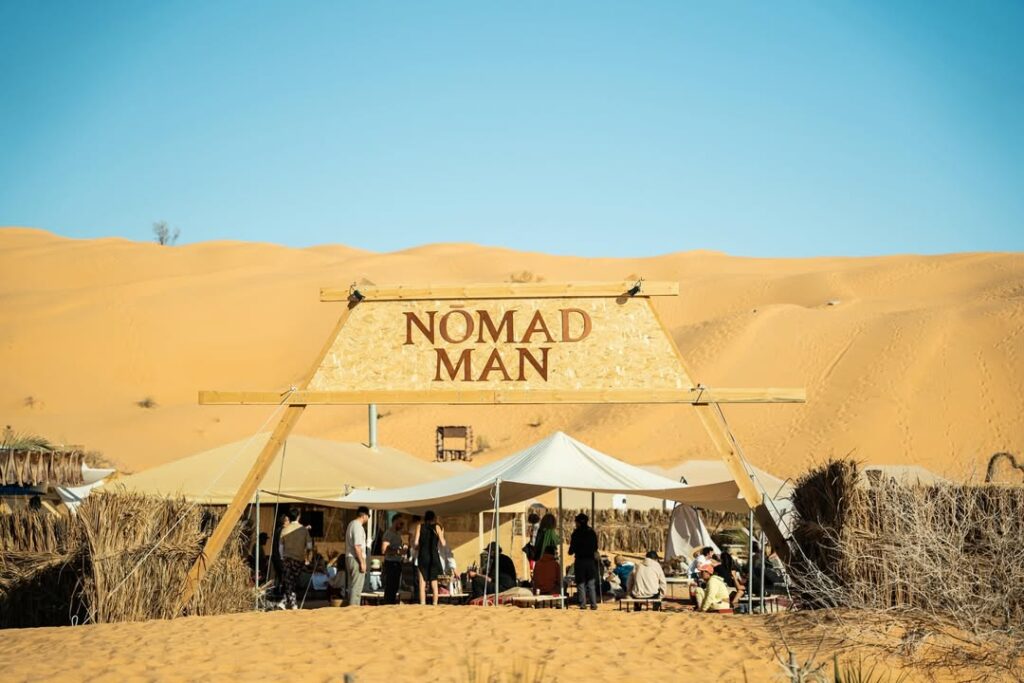
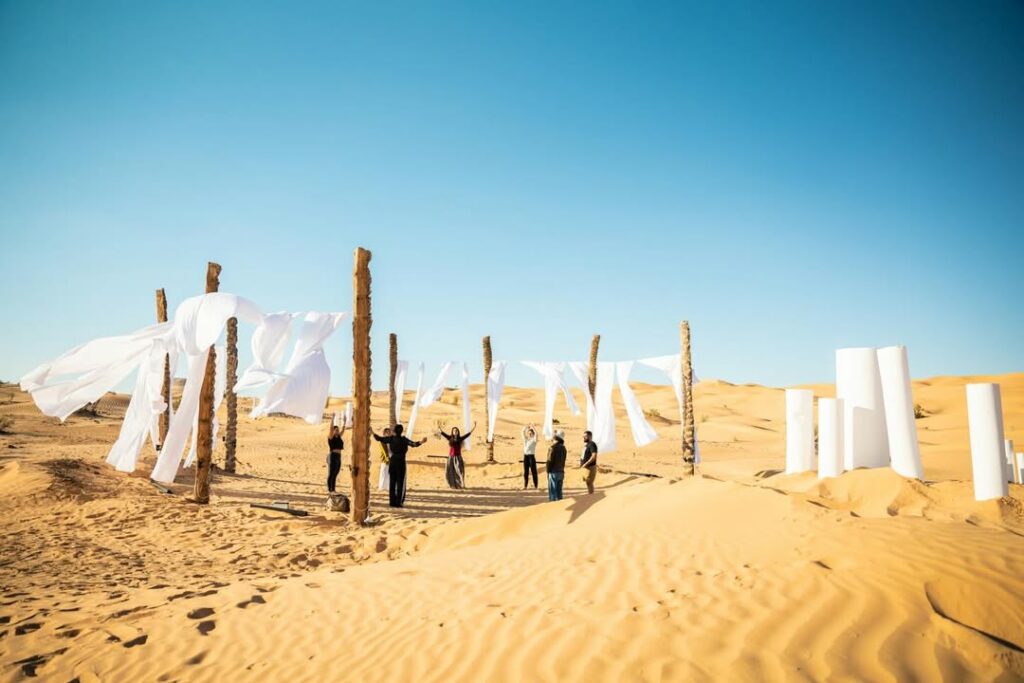
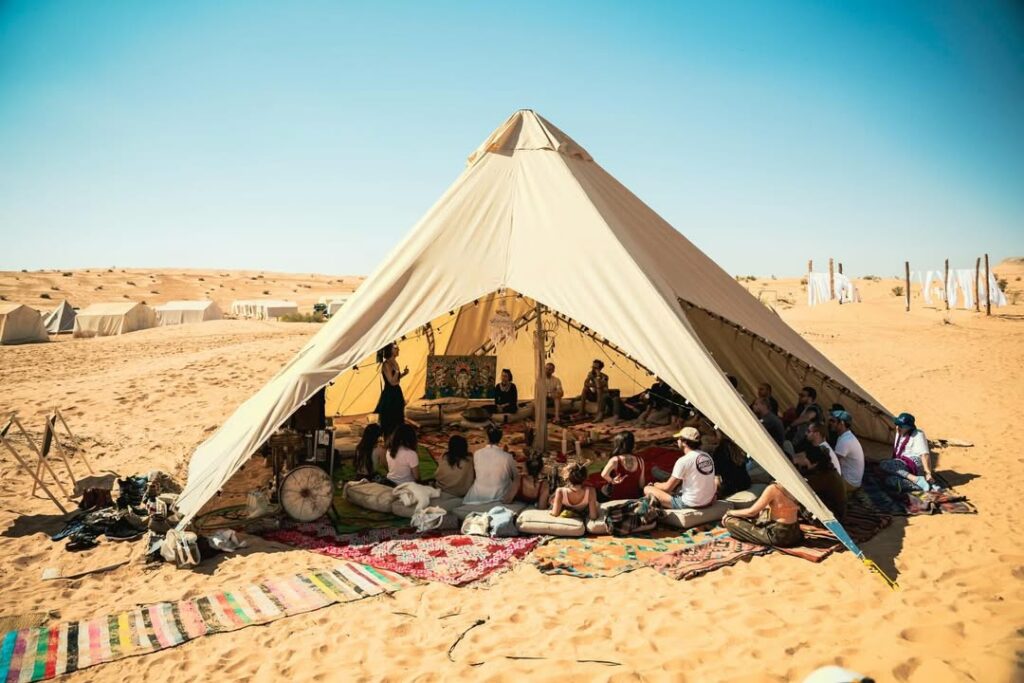
The camp is designed as a temporary settlement, with accommodation units, shared facilities and open gathering spaces spread across the desert. Its layout allows participants to move between areas for rest, group activities and contact with the surrounding landscape. Depending on where they spend their time, they can experience both private moments and collective encounters. The desert therefore becomes an extension of the living space rather than simply a backdrop.
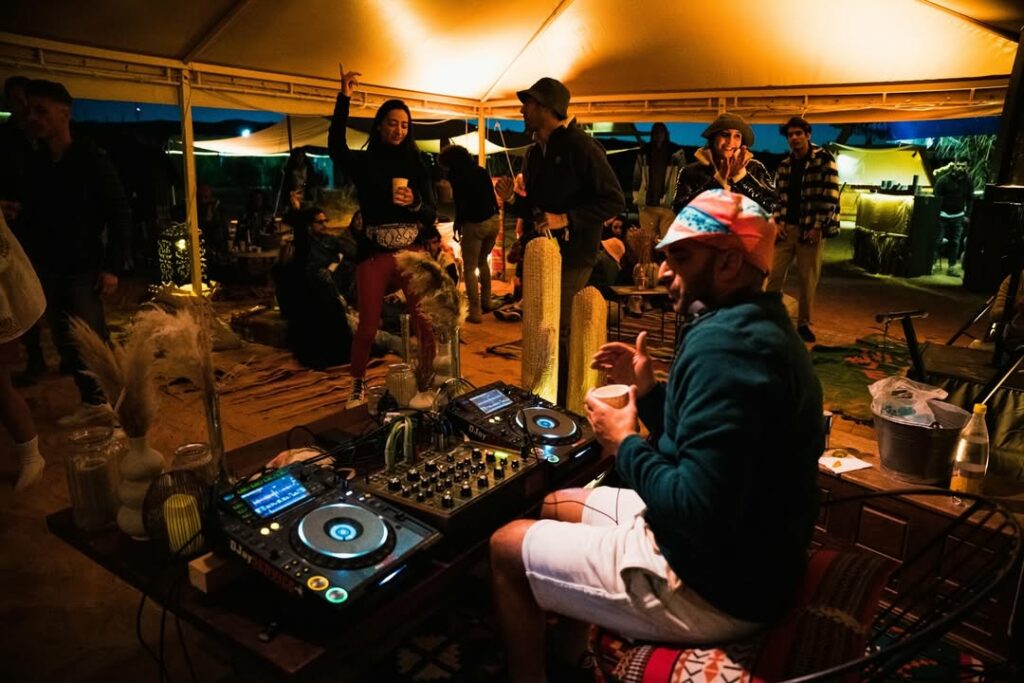
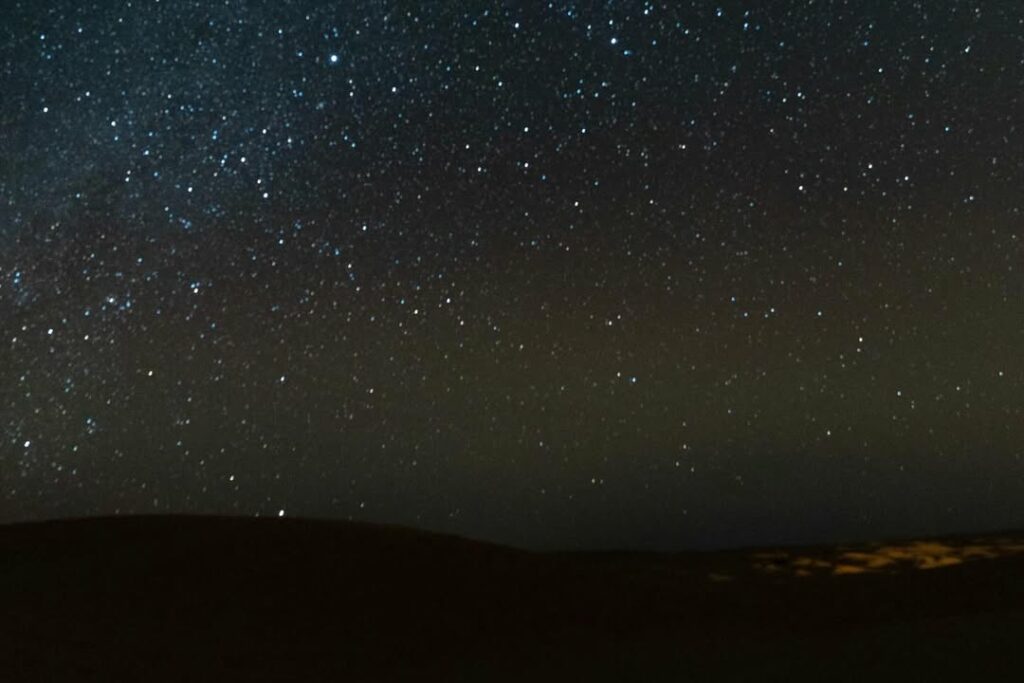
Time at Nomad Man follows the rhythms of the environment and the group. Over three days and three nights, activities form a connected experience rather than a series of separate events. Daytime generally focuses on physical practices, workshops and exploration. After sunset, music, visual art and collective gatherings take centre stage. This rhythm responds to changes in temperature, light and atmosphere. As a result, time feels more connected to the natural environment than to a conventional festival schedule.
The programme brings together artistic expression, wellness and exploration. Musical performances, visual mapping, film screenings and performance art take place in open spaces. The boundaries between performers and participants can remain fluid, encouraging direct interaction. Rather than existing as isolated spectacles, these activities become part of daily life at the camp. Projections and lighting installations also engage with the desert’s physical qualities. Sand, darkness and open space become elements of temporary visual environments.
Wellness is another important part of the gathering. Activities include yoga, meditation, breathwork, body alignment and therapeutic sessions. These practices encourage participants to focus on movement, breathing and stillness. Their setting adds another dimension to the experience. Surrounded by the vast desert landscape, participants can explore the relationship between their bodies and the environment. Both group sessions and individual encounters offer different ways to take part.
Exploration activities draw directly on the characteristics of the Sahara. Guided journeys introduce participants to desert mobility, navigation and the use of specialised vehicles. These experiences also highlight the knowledge and preparation required to travel through such an environment. Instead of presenting the desert as a territory to conquer, the programme encourages participants to understand its limits, adapt to its conditions and respect local expertise.
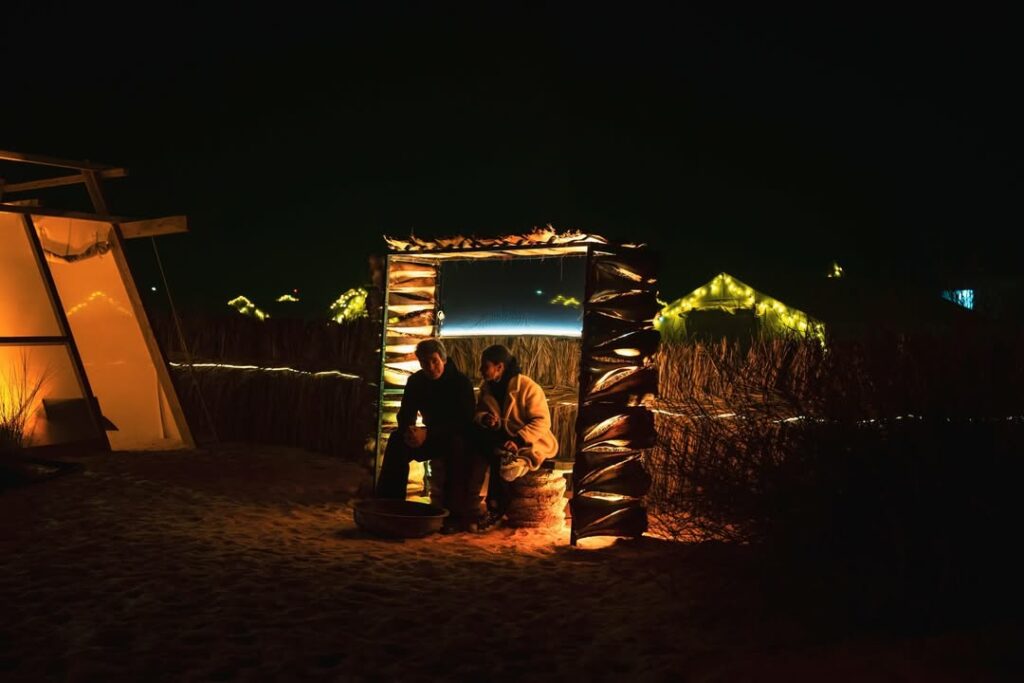
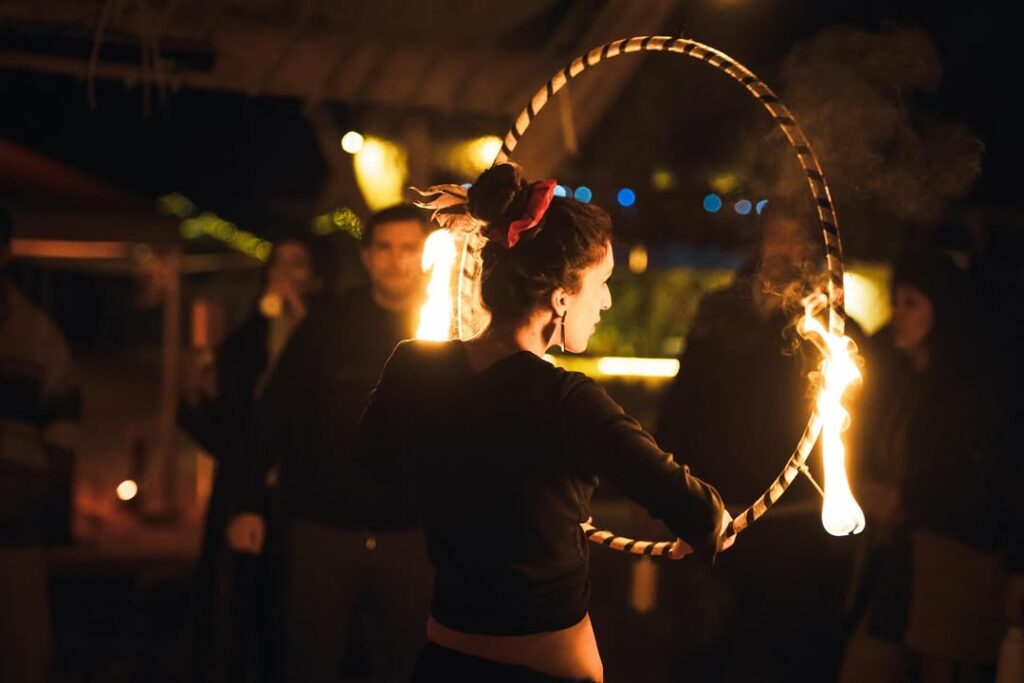
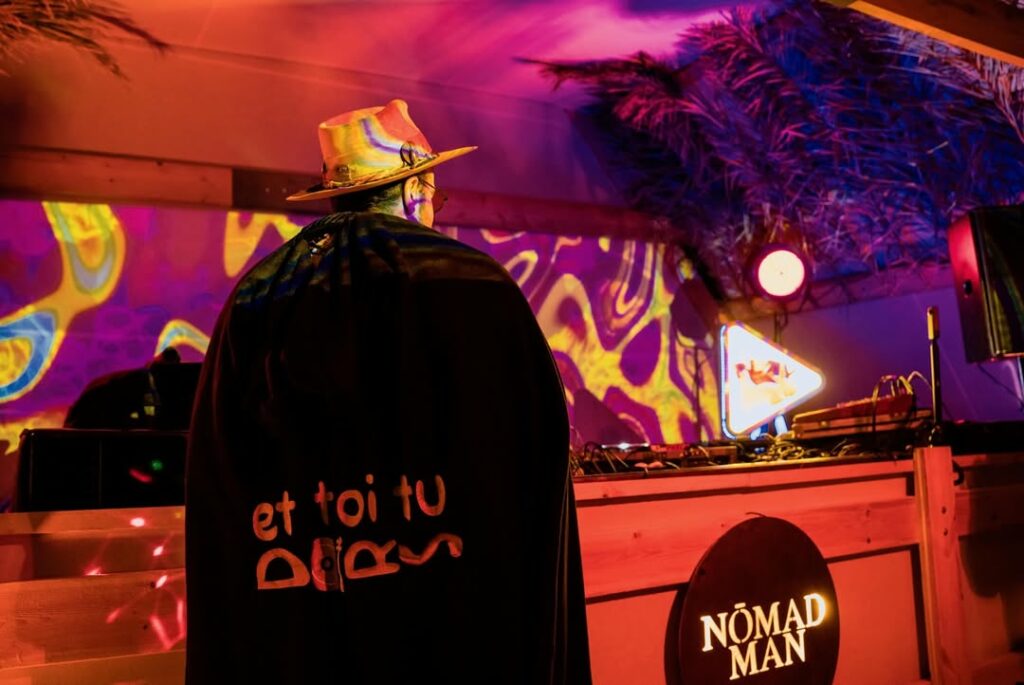
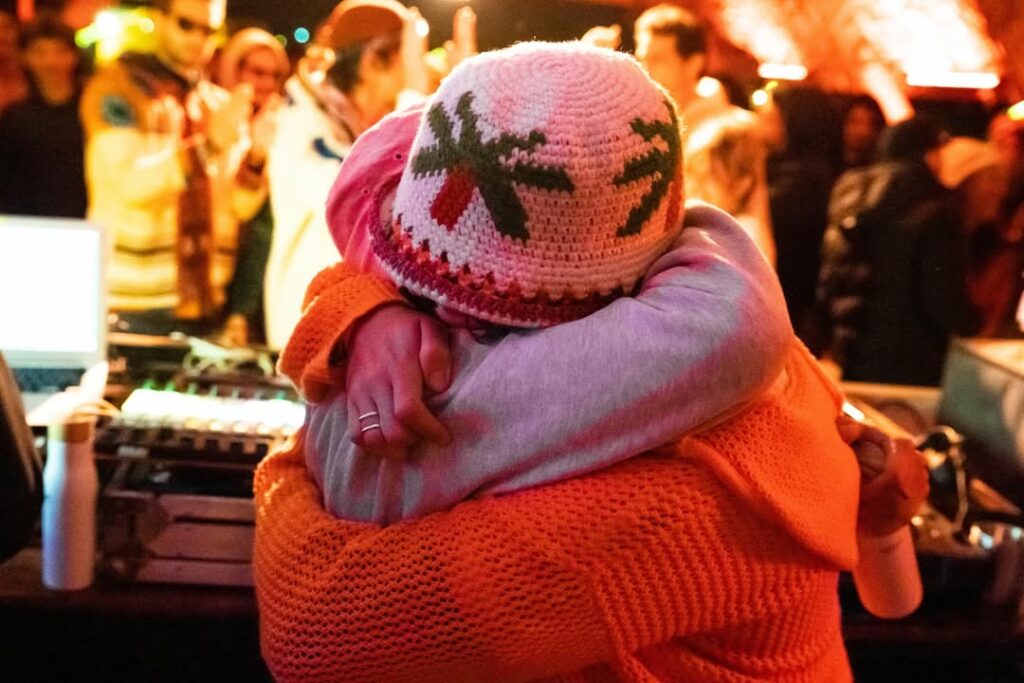
Accommodation at the camp offers several levels of comfort and independence. Some participants stay in equipped units with private facilities, while others choose shared tents or wild camping with basic equipment. These options create a diverse living environment where different needs and preferences can coexist. Despite these differences, everyone shares communal spaces, meals and activities. This shared experience helps build a sense of belonging.
The camp also follows an ethical framework centred on environmental responsibility and collective safety. Waste reduction, careful resource use and restrictions on independent movement through the desert help limit environmental impact and reduce risks. Participants are encouraged to look after themselves and support others. Isolation and unfamiliar terrain make awareness and cooperation particularly important. Without digital connectivity, clear communication and mutual reliance become essential to daily life.
Community building is central to the Nomad Man experience. Its selective participation and relatively small scale allow people to interact repeatedly over three days and three nights. Shared challenges, including long journeys, heat and adapting to desert conditions, encourage cooperation. Artistic and wellness activities also create opportunities for conversation, exchange and collaboration. Together, these experiences help participants form social connections that extend beyond the programme itself.