Échos Solidaires 2025: The Social and Solidarity Economy as a Lever for Territorial Climate Adaptation
By Tunez Magazine ·
Échos Solidaires 2025 takes place amid rapid climate, social, economic, and territorial changes. According to the event’s programme, climate change is already affecting Tunisia. It disrupts ecological balances, threatens economic activities, and deepens inequalities in access to resources. It also raises questions about social justice and solidarity between territories.
Climate change is therefore more than an environmental issue. It is closely linked to gender, culture, collective organisation, and labour. Against this backdrop, the 2025 edition asks how the social and solidarity economy (SSE) can support climate adaptation. It explores how the SSE’s values, organisational models, and local roots can contribute to lasting change. This approach places the SSE at the heart of the transition, rather than treating it as a secondary actor.
The choice of Nefta, an oasis in southwestern Tunisia, gives this discussion a clear territorial focus. The region faces growing climate pressures while benefiting from a strong culture of collective initiative. Its oasis ecosystems face several challenges, including water scarcity, soil salinisation, and changing economic models. Yet Nefta is also home to associations, agricultural groups, cooperatives, cultural spaces, and youth-led initiatives. Together, these actors show how local cooperation can strengthen resilience and support the ecological transition.
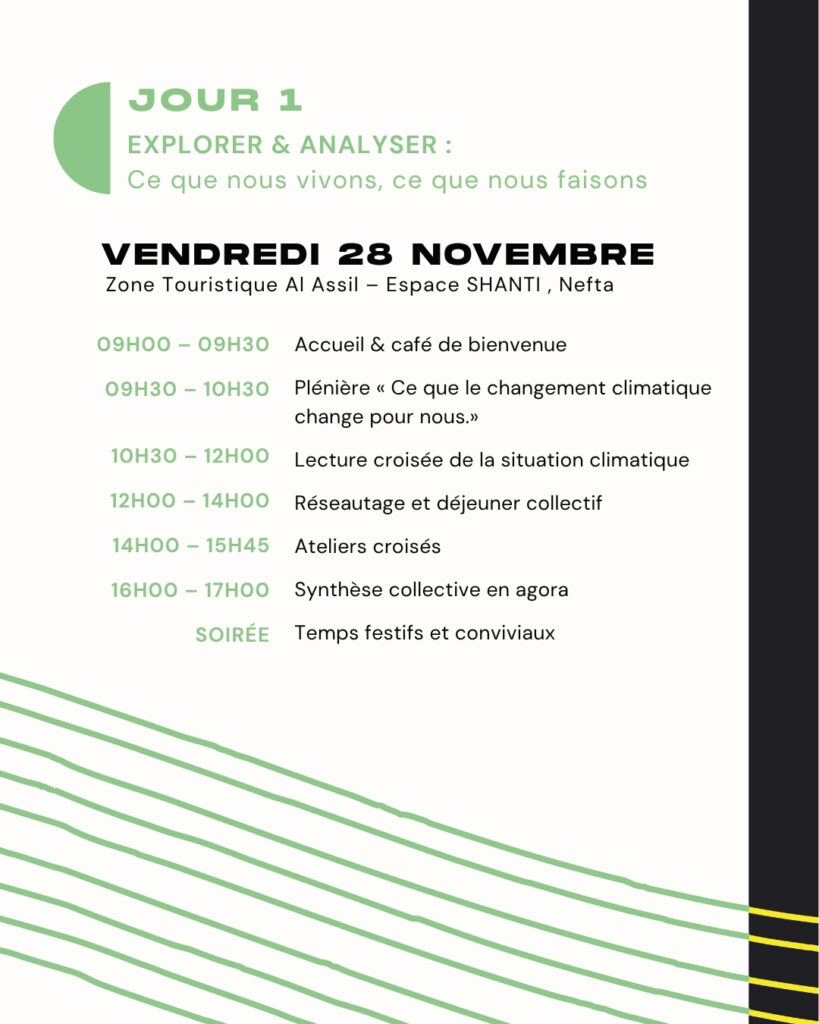
Échos Solidaires brings together different forms of knowledge and experience. On the first day, scientific research, local perspectives, and political discussions help frame the debate. Residents and practitioners share their experiences alongside climate data. This exchange helps build a clearer understanding of the changes affecting local communities.
Workshops bring together researchers, SSE representatives, and people working on the ground. They examine existing initiatives, assess their impact, and identify ways to adapt or replicate successful approaches elsewhere. The programme highlights an essential point: climate adaptation requires more than access to information. It also depends on spaces where people can share knowledge, discuss local needs, and turn collective understanding into practical action.
Rethinking Territorial Vulnerabilities Through Collective Knowledge
The workshop on territorial vulnerabilities questions the limits of traditional diagnostic tools. It invites participants to rethink how territorial changes are studied and represented. The approach brings together scientific research, local knowledge, and the experiences of social and economic initiatives.
The aim is to turn existing studies into tools that communities can understand and use. This process allows residents and local actors to develop shared visions for their future. It also recognises that climate adaptation must be based on inclusive and participatory knowledge. Local communities should not simply receive information. They must also help produce it and shape the decisions that affect their territories.
How the Social and Solidarity Economy Supports Local Resilience
Another workshop explores collective practices within the social and solidarity economy (SSE). Across Tunisia, cooperatives, associations, social enterprises, citizen collectives, and local networks respond to economic, social, and environmental needs. Their approaches often differ from those of conventional markets and public institutions.
Many of these organisations have learned to adapt to changing circumstances. Their experience offers valuable insights into the challenges posed by climate uncertainty, seasonal changes, and limited resources. Community cooperation also helps them respond to shared needs.
Through initiatives such as Ftartchi, the Tunisian Permaculture Association, Dar El Ain, and IN Nefta, Échos Solidaires 2025 examines how local resources and cultural practices can strengthen resilience. These initiatives show that social innovation can emerge from difficult conditions. They also demonstrate how collective autonomy can support both ecological sustainability and local economic development.
Traditional Crafts and Sustainable Production in Nefta
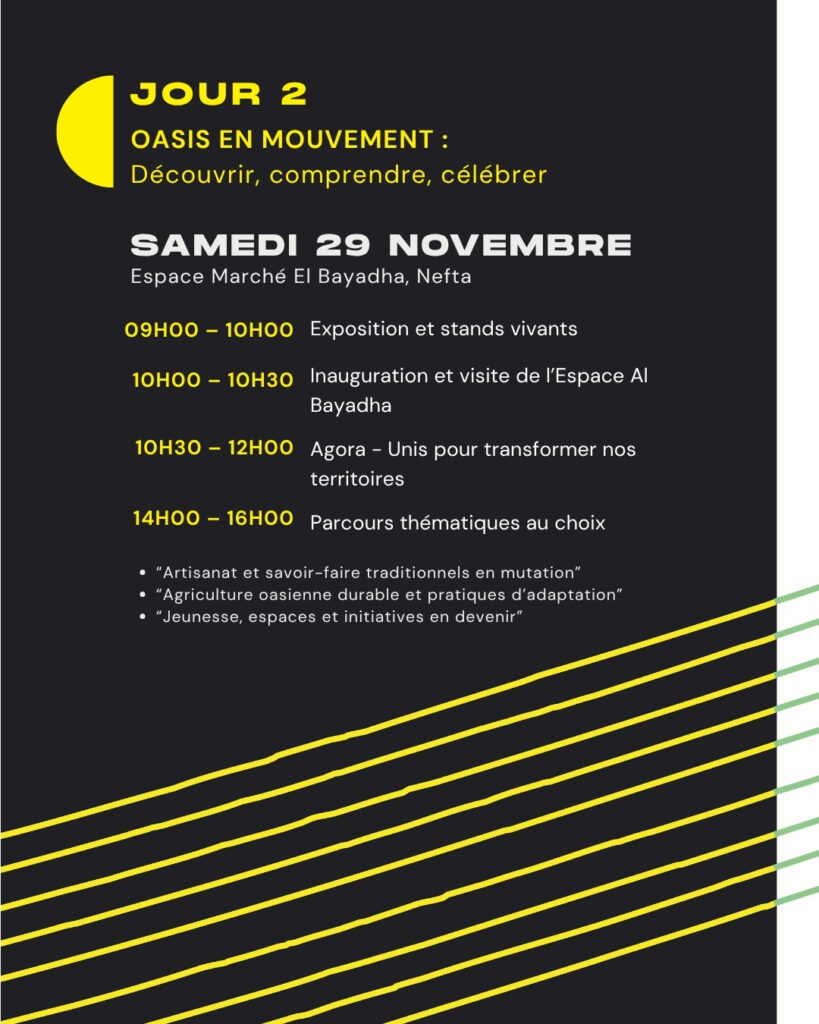
The public programme extends these discussions into the streets and community spaces of Nefta. Exhibitions, open stands, and thematic pathways give visitors the opportunity to discover local practices and the people who sustain them.
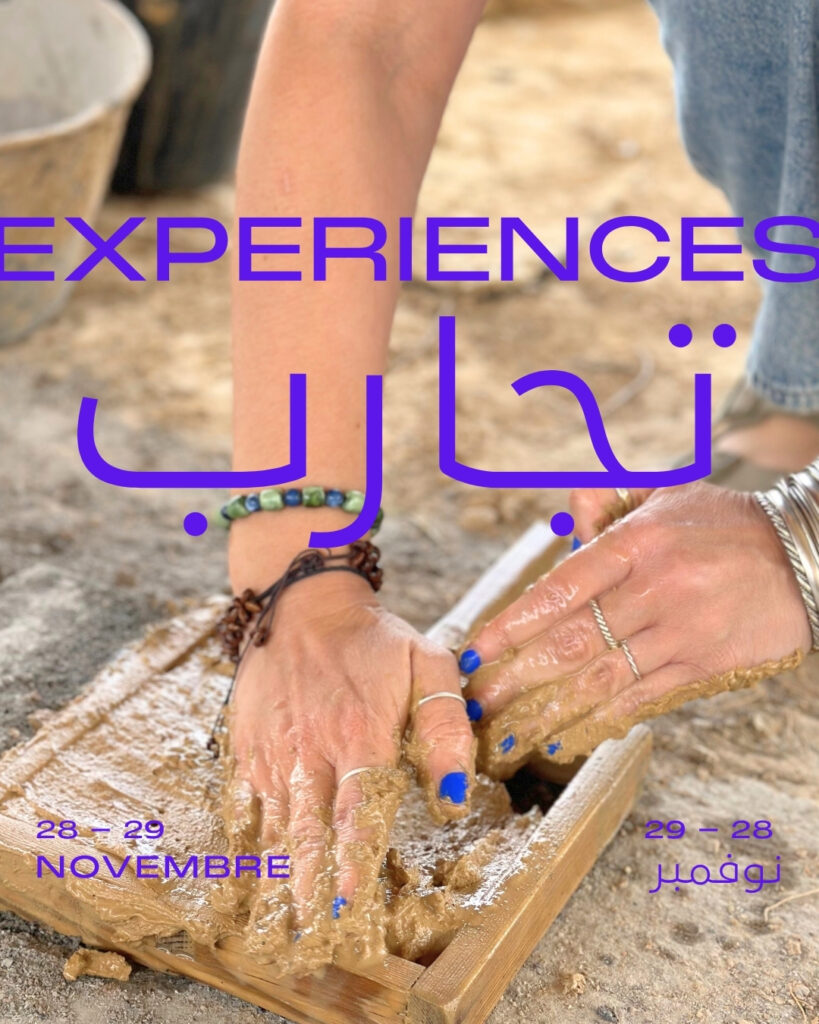
One pathway focuses on traditional crafts and their contemporary reinvention. The El Mensej weaving space illustrates how women and young creators are reinterpreting inherited skills. Craftwork becomes more than a way to preserve cultural heritage. It can also support economic independence, cultural expression, and more sustainable production.
The use of natural materials and durable techniques further connects these practices to environmental concerns. By adapting traditional knowledge to contemporary needs, local creators show how heritage can remain a living resource rather than a fixed reminder of the past.
Oasis Agriculture and the Ecological Transition
A second pathway explores sustainable agriculture in oasis territories. Farmers, agricultural development groups, and associations present practices that respond to environmental pressures while supporting local livelihoods.
Their work includes agricultural diversification, circular economy initiatives, agrotourism, and the promotion of local products. These approaches seek to make better use of available resources while strengthening connections between producers and their communities.
The examples presented in Nefta show that ecological transition does not depend exclusively on large-scale policies or technological solutions. It can also grow from cooperation between farmers, citizens, and local organisations. By building on existing resources and shared knowledge, these actors contribute to more resilient territorial economies.
Youth Initiatives and the Importance of Shared Spaces
A third pathway highlights the role of young people in shaping the future of their territories. Youth centres, local associations, and educational spaces provide opportunities to meet, exchange ideas, and develop artistic, civic, and social projects.
These spaces allow young people to participate in community life and explore new possibilities. They also reveal the difficulties they face, including limited resources and a lack of opportunities. Recognising both their aspirations and their constraints is essential to building more inclusive local development strategies.
By placing youth initiatives within the wider discussion on climate adaptation, Échos Solidaires 2025 highlights the importance of participation across generations. Young people are not simply beneficiaries of territorial policies. They can also become active contributors to social innovation and collective resilience.
Climate Adaptation as a Collective Transformation
Across its workshops and public activities, Échos Solidaires 2025 presents a broader understanding of climate adaptation. Adaptation is not limited to infrastructure, environmental management, or technical solutions. It also involves transforming social relationships, economic models, and cultural practices.
The social and solidarity economy offers a framework for this transformation. Cooperation, mutual aid, shared governance, diverse forms of knowledge, and strong local connections can help communities respond to environmental uncertainty. These principles challenge approaches based solely on competition and individual responsibility.
From traditional crafts to sustainable agriculture, the initiatives presented in Nefta show how collective action can connect environmental concerns with social and economic needs. Resilience, in this perspective, depends not only on technology or infrastructure but also on the relationships that enable communities to organise, share resources, and respond to change.
Échos Solidaires 2025 thus places local cooperation at the centre of the climate debate. Its approach suggests that the capacity to adapt depends partly on how communities recognise their shared challenges and build collective responses. In Tunisia’s oasis territories, the social and solidarity economy offers a valuable perspective on how ecological transition can become a participatory and locally grounded process.
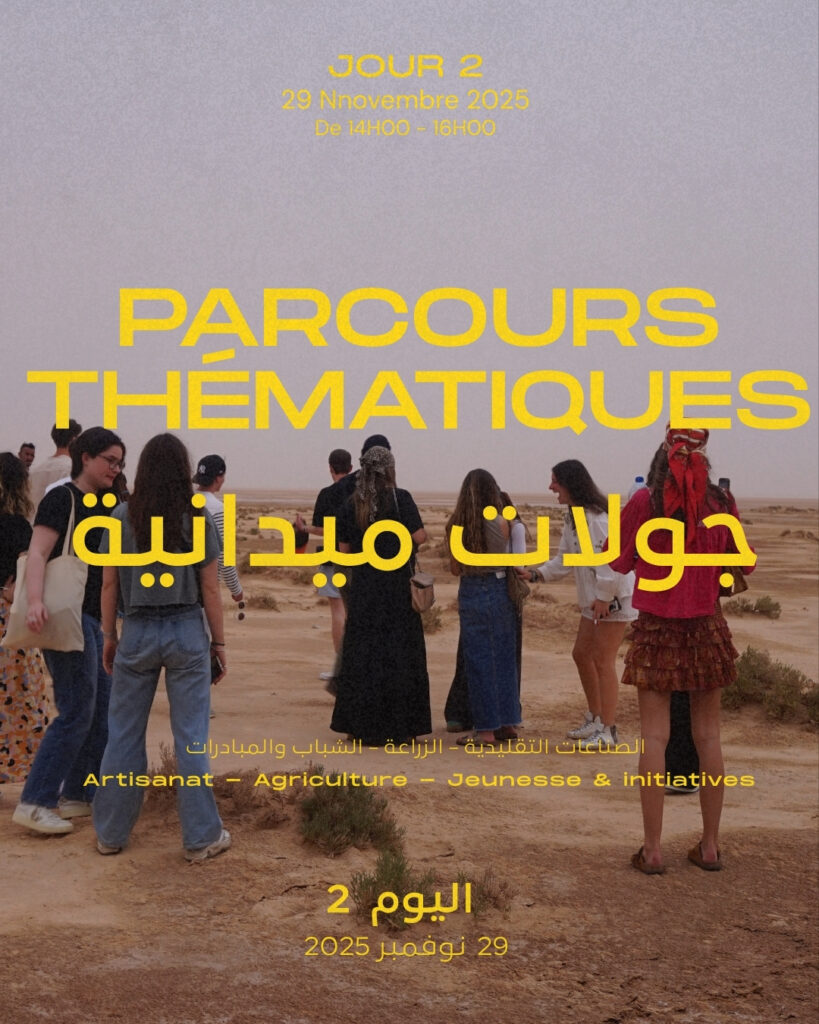
Through its methodology and its immersion in the lived realities of Nefta, the event demonstrates that effective climate adaptation must emerge from the territories themselves. When communities have opportunities to meet, analyse their experiences collectively, share knowledge, and build alliances, they are better positioned to confront crises and imagine alternative futures. Échos Solidaires 2025 thus illustrates how the social and solidarity economy can contribute to climate adaptation by linking ecological transition with social justice, community empowerment, and economic innovation. Far from being a marginal experiment, the event offers a reproducible model for other regions facing similar climatic and socioeconomic challenges.
Explore the Échos Solidaires Website for full details and updates.