GQ Middle East Spotlights Tunisia’s Next Generation of Wrestling Champions
By Tunez Magazine ·
GQ Middle East’s final November cover features Mohamed Amine Ben Salah and Zakaria Ben Hassine. Both athletes represent Tunisia’s national wrestling team. Through their beach matches, they bring sport and community together.
GQ Middle East turns its attention to Tunisia’s Mediterranean coastline for its final November cover. This time, the magazine follows two young athletes who are taking wrestling beyond traditional training spaces.
Titled The Beach Wrestlers of Tunis, the feature follows Mohamed Amine Ben Salah and Zakaria Ben Hassine. Both represent Tunisia’s national wrestling team. However, their activities extend beyond official competitions. They also organise informal matches on public beaches, where athletes, spectators and newcomers gather around the action.
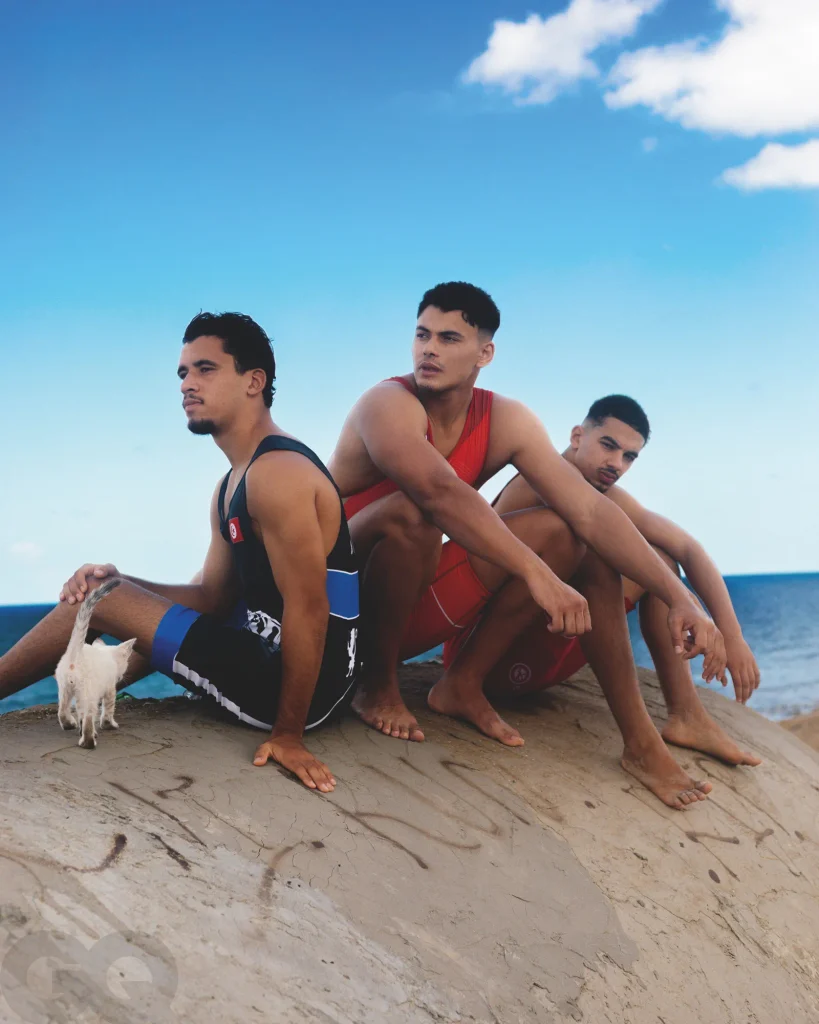
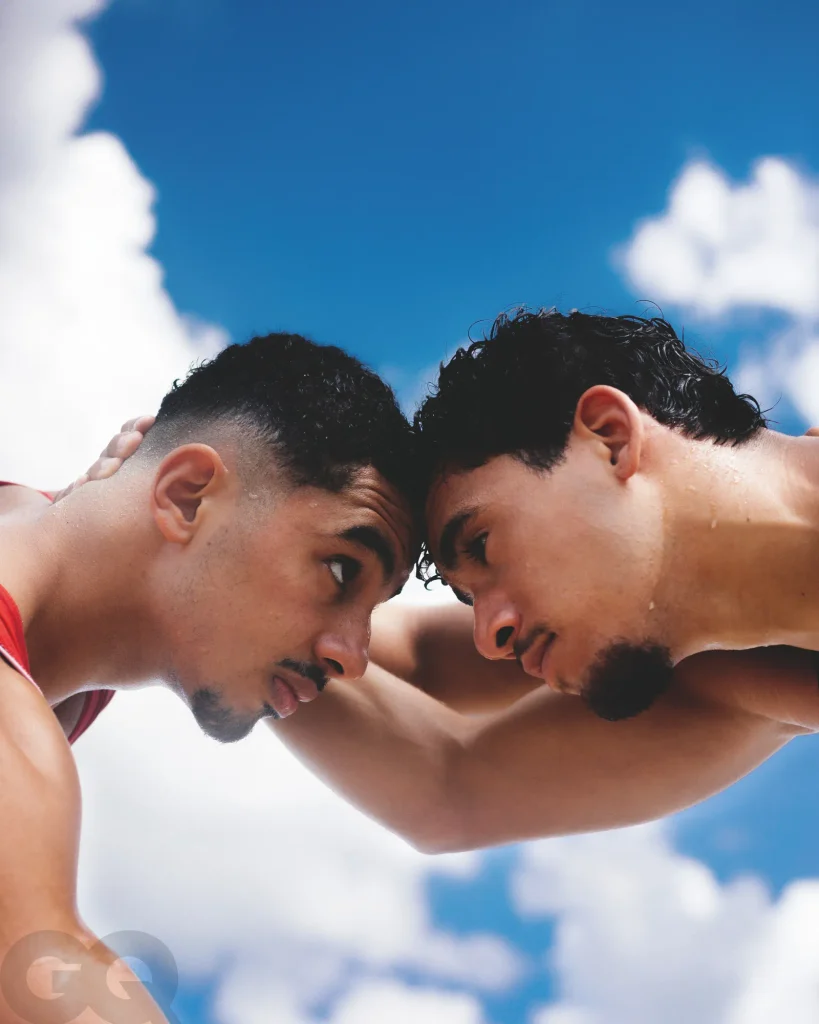
Written by Amelia Dhuga and photographed by Bachir Tayachi, the feature explores their lives against a challenging social backdrop. Fifteen years after the 2011 revolution, greater opportunities remain out of reach for many young Tunisians. As a result, the beach offers more than a place to relax. It becomes somewhere to train, connect and escape everyday frustrations.
For Ben Salah and Ben Hassine, wrestling is about more than competition. Instead, it creates opportunities for others to discover the sport. By moving their matches outside traditional facilities, they welcome newcomers and encourage wider participation. In this way, the beach becomes a meeting point for people with different backgrounds and levels of experience.
Moreover, the project highlights the social importance of Tunisia’s public beaches. Although these spaces are often associated with leisure and tourism, they can also encourage collective activity. Here, wrestling brings people together around a shared interest. Meanwhile, each match gives spectators the chance to discover a sport that receives less public attention than football.
Through this latest Tunisia project, GQ Middle East presents a portrait of youth, resilience and community. Rather than serving as a scenic backdrop, the coastline becomes an essential part of the story. It reflects how young people can create opportunities with the spaces available to them.
Ultimately, The Beach Wrestlers of Tunis captures two athletes building their own place within contemporary Tunisia. On the Mediterranean shore, wrestling becomes a training ground and a meeting place. More importantly, it offers a way to connect with others and imagine new possibilities.