


Eya Bellagha: From Early Screen Roles to Best First-Time Lead Actress in Amman
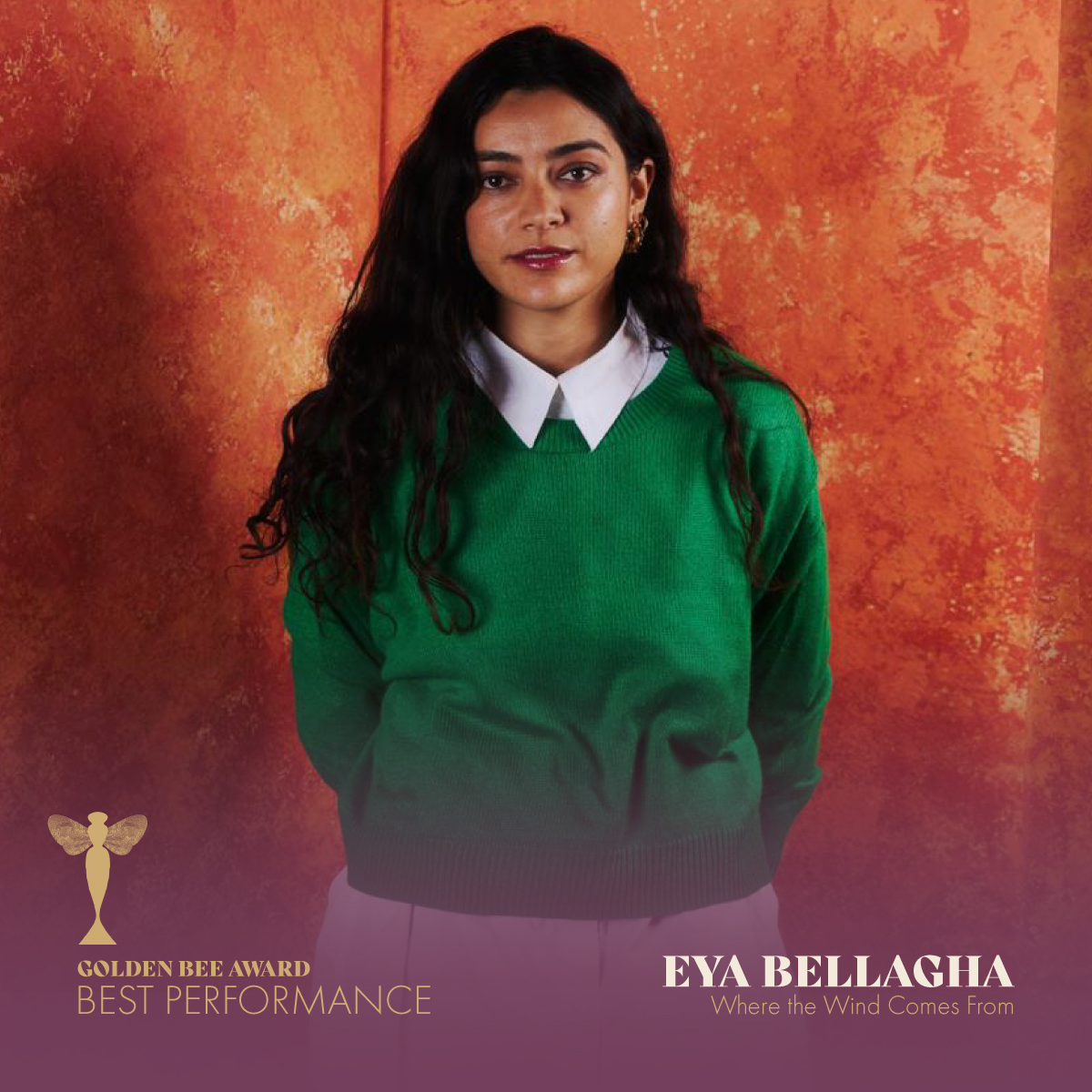
Tunisian actress Eya Bellagha has received the Best First-Time Lead Actress award at the 7th Amman International Film Festival for her performance in Amel Guellaty’s Where the Wind Comes From. The festival presented the award during its closing ceremony on August 3, 2026. Bellagha earned the honour in the Arab Feature-Length Narrative Film Competition.
The recognition comes at an important point in Bellagha’s career. Over the past several years, she has moved between Tunisian television and cinema, gradually building a screen presence through roles that often place young women at the centre of difficult social and personal situations. Her journey began with El Maestro and continued through Harga, Harga 2, and eventually her leading role as Alyssa in Where the Wind Comes From. Across these projects, Bellagha has developed a career shaped by characters marked by intensity, independence, and a strong physical and emotional presence.
Her award in Amman therefore means more than recognition for a single performance. It represents a significant moment for an actress who entered the Tunisian audiovisual landscape at a young age and has continued to expand her work across different formats.
Eya Bellagha first became known to a wider Tunisian television audience through El Maestro, the 2019 series directed by Lassaad Oueslati. She played Manal, a young woman held in a juvenile rehabilitation centre. At the time, Bellagha was still at an early stage of her career, but the role showed a distinctive screen presence.
El Maestro became an important point in her professional trajectory. Rather than arriving in cinema with a long list of previous roles, she developed her acting career through a relatively small but increasingly visible body of work. Her filmography remains selective, yet each role has allowed her to explore different representations of Tunisian youth.
Two years later, Bellagha appeared in Harga, again under the direction of Lassaad Oueslati. She played Salma and returned to the role in Harga 2. The series explored migration, youth, family relationships, and the social pressures that shape decisions around leaving Tunisia. Through the series, Bellagha strengthened her position beyond her first television role and joined a story connected to one of the most persistent subjects in contemporary Tunisian society.
Her filmography also includes the 2021 short film Prison des chiffres, directed by Samy Chaffai. Although her screen work remains relatively limited in number, her move from television to short film and then to a leading feature-film role shows a clear expansion of her acting experience.
Sport has also become an important part of Bellagha’s public profile. According to biographical information published by ElCinema and reported by La Presse, she is a four-time Tunisian champion in kickboxing. That physical discipline forms an interesting parallel with the energy that often characterises her screen performances.
In February 2026, La Presse described Bellagha as one of the emerging faces of Tunisian acting and highlighted her role as El Yamna in Khottifa, directed by Saoussen Jomni. The character represented another stage in her development, following the television roles that first brought her recognition and the international exposure generated by Where the Wind Comes From.
El Yamna also reflects the kind of characters Bellagha has increasingly played. Her performances often carry a physical quality through movement, attitude, humour, confrontation, or a refusal to remain passive. Still, reducing her work to the image of the rebellious young woman would overlook the more sensitive dimension of her acting.
That balance becomes particularly important in Where the Wind Comes From.
Amel Guellaty wrote and directed the film, which follows Alyssa, a rebellious 19-year-old, and Mehdi, her shy 23-year-old best friend. The two live in Tunis and dream of changing their circumstances. When they discover a competition in Djerba that could open a path towards a different future, they decide to travel across Tunisia together. Their road trip becomes both a physical journey and a confrontation with their dreams, frustrations, friendship, and uncertainty about what comes next.
Bellagha plays Alyssa, placing her at the centre of the film. Alyssa is energetic, impulsive, imaginative, and unwilling to accept the limits imposed on her. Yet she is not simply a symbol of rebellion. The character carries contradictions. She can be funny and vulnerable, determined and uncertain, confident and afraid. These shifts give Bellagha space to move beyond the intensity of her earlier television roles.
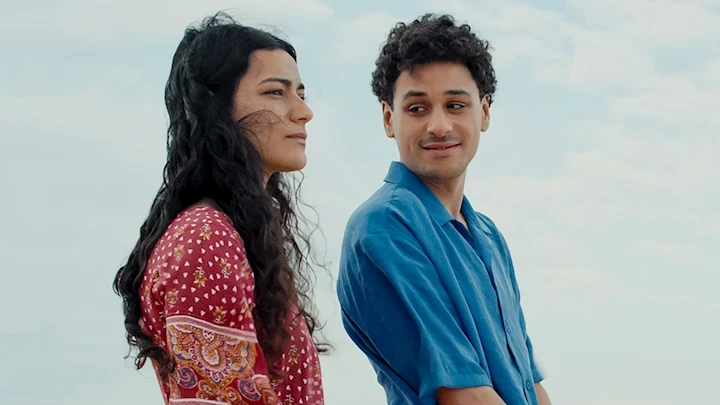
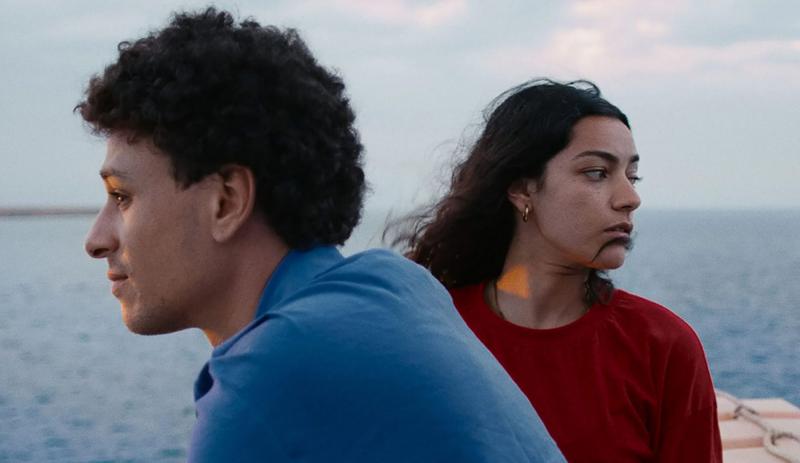
Much of the performance also depends on the chemistry between Bellagha and Slim Baccar, who plays Mehdi. Their relationship remains central to the film. Alyssa and Mehdi are not simply two young people attempting to escape their circumstances. They are friends whose understanding of each other changes as their journey progresses. Bellagha gives Alyssa the force needed to push the story forward while keeping her vulnerability visible.
International critics also noticed that quality. Rotten Tomatoes’ collection of reviews for the film includes praise for Bellagha’s energy and personality in the role, with critics describing her performance as one of the film’s strongest elements.
The film itself represents an important moment for Tunisian cinema. Where the Wind Comes From is Guellaty’s first feature film after her earlier short films Black Mamba and Chitana. It premiered internationally at the 2025 Sundance Film Festival in the World Cinema Dramatic Competition. Tunisian, French, and Qatari partners worked together on the production, while the film later travelled through international festivals and eventually reached Tunisian cinemas in 2026.
For Bellagha, the journey of Where the Wind Comes From has transformed Alyssa into the role through which her international profile is now most strongly defined. The film gave her the opportunity to work within an international festival environment while remaining deeply connected to Tunisian landscapes, language, youth culture, and social realities.
The Amman award carries particular significance because the festival’s Best First-Time Lead Actress category recognises an actor’s performance in a first leading feature role. Bellagha won the award in the Arab Feature-Length Narrative Film Competition, while Hasan Akil received the corresponding Best First-Time Lead Actor award for A Sad and Beautiful World.
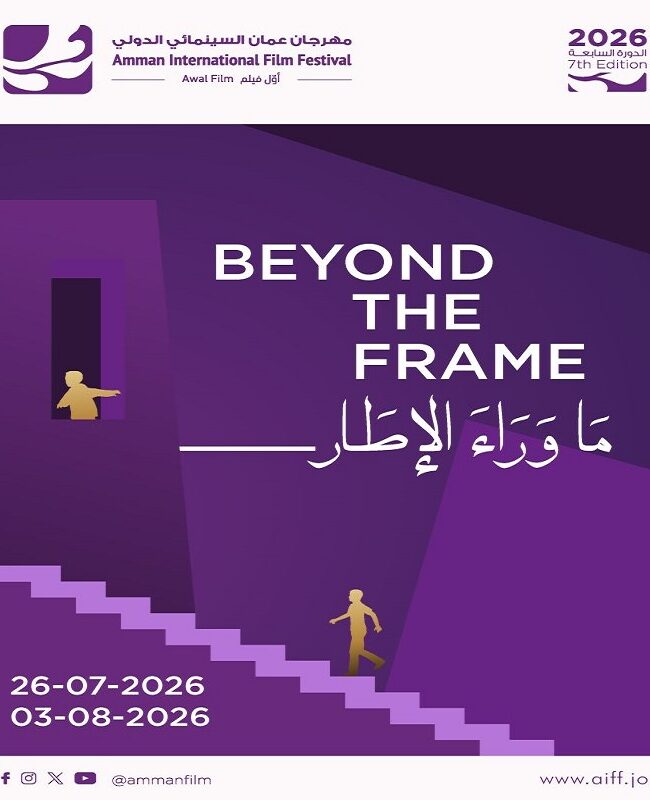
The recognition also arrived during an edition of the Amman International Film Festival that placed particular attention on Tunisian cinema. The festival’s seventh edition followed the theme “Beyond the Frame” and brought together filmmakers, industry professionals, and audiences from across the Arab world and beyond. During the closing ceremony, the festival celebrated achievements across Arab and international competitions, with Bellagha among the recognised performers.
Her victory places an international marker on a career that began in Tunisian television.
That trajectory is worth considering because Bellagha has not followed the conventional path of an actress accumulating dozens of screen credits before reaching international cinema. Her filmography is still relatively compact. Available film and television databases list El Maestro, Harga, Harga 2, and Where the Wind Comes From among her principal screen credits. Tunisian cinema documentation also records her appearance in Prison des chiffres.
What makes this trajectory notable is the distance between those projects.
In El Maestro, Bellagha appeared as Manal, a young woman inside a rehabilitation institution. Harga and Harga 2 introduced her as Salma in a series dealing with migration and its consequences. Khottifa brought her into the role of El Yamna, another character defined by independence and determination. Finally, Where the Wind Comes From introduced her as Alyssa, a young woman whose imagination and desire for another life take her on a road trip across Tunisia.
Across these characters, a recurring element emerges: young women trying to define their own position in a society that often attempts to define it for them.
Still, Bellagha’s career should not be reduced to a single thematic interpretation. Her performances also show an interest in characters with movement and physicality. Her kickboxing background forms part of that equation, giving her a discipline outside acting that has become part of her public profile. La Presse specifically connects her sporting background with the energy and physical intensity of her performances.
Recognition in Amman also comes at a moment when Tunisian cinema continues to gain visibility internationally. Tunisian filmmakers and performers have increasingly appeared at major international festivals, while a new generation of actors moves between local television, independent cinema, and international productions.
Bellagha’s story fits within that broader movement, but her trajectory remains distinctly her own.
Her screen journey began with El Maestro. Harga and Harga 2 followed, giving her further television experience. She then appeared in short-form cinema before taking on a major feature role in Where the Wind Comes From. In 2026, she also appeared in Khottifa. Now, the Amman award gives her one of the clearest international recognitions of her work to date.
This award does not mark the conclusion of her journey. Instead, it gives another important point of reference to a career that continues to develop.
For Eya Bellagha, Alyssa was a particularly important character because the role required her to carry a feature film rather than simply contribute to an ensemble. The Amman jury’s decision recognises that responsibility. It also acknowledges her transition from an actress known largely through Tunisian television to a performer whose work now reaches a wider Arab cinema landscape.
There is something fitting about the fact that the award came for Where the Wind Comes From. The film is built around two young people who refuse to accept that their current circumstances should determine the limits of their future. Bellagha’s own career, at least at this stage, can be read through a similar movement: from early television appearances to increasingly demanding roles, from Tunisia to international festival screens, and now from emerging talent to award-winning lead actress.
The next chapter remains open.
Eya Bellagha has already established a presence in Tunisian television and has now gained international recognition for her first major feature-film lead. Her career is still young, but the Amman award confirms that her work has begun to travel beyond the context in which it first emerged.
For Tunisian cinema, it is another reason to look closely at the new generation of actors shaping its present. For Bellagha, it is a significant first international distinction, attached to a performance that placed her at the heart of one of Tunisia’s most visible recent films.
In Amman, Eya Bellagha did not simply receive a trophy for a role. She received recognition for a performance that carried a Tunisian story beyond its original borders.
And for an actress whose screen career began with El Maestro in 2019, this may be less a conclusion than the beginning of a much wider journey.