




Mirrored architecture of Lake Hotel Tunis and Sarajevo HQ
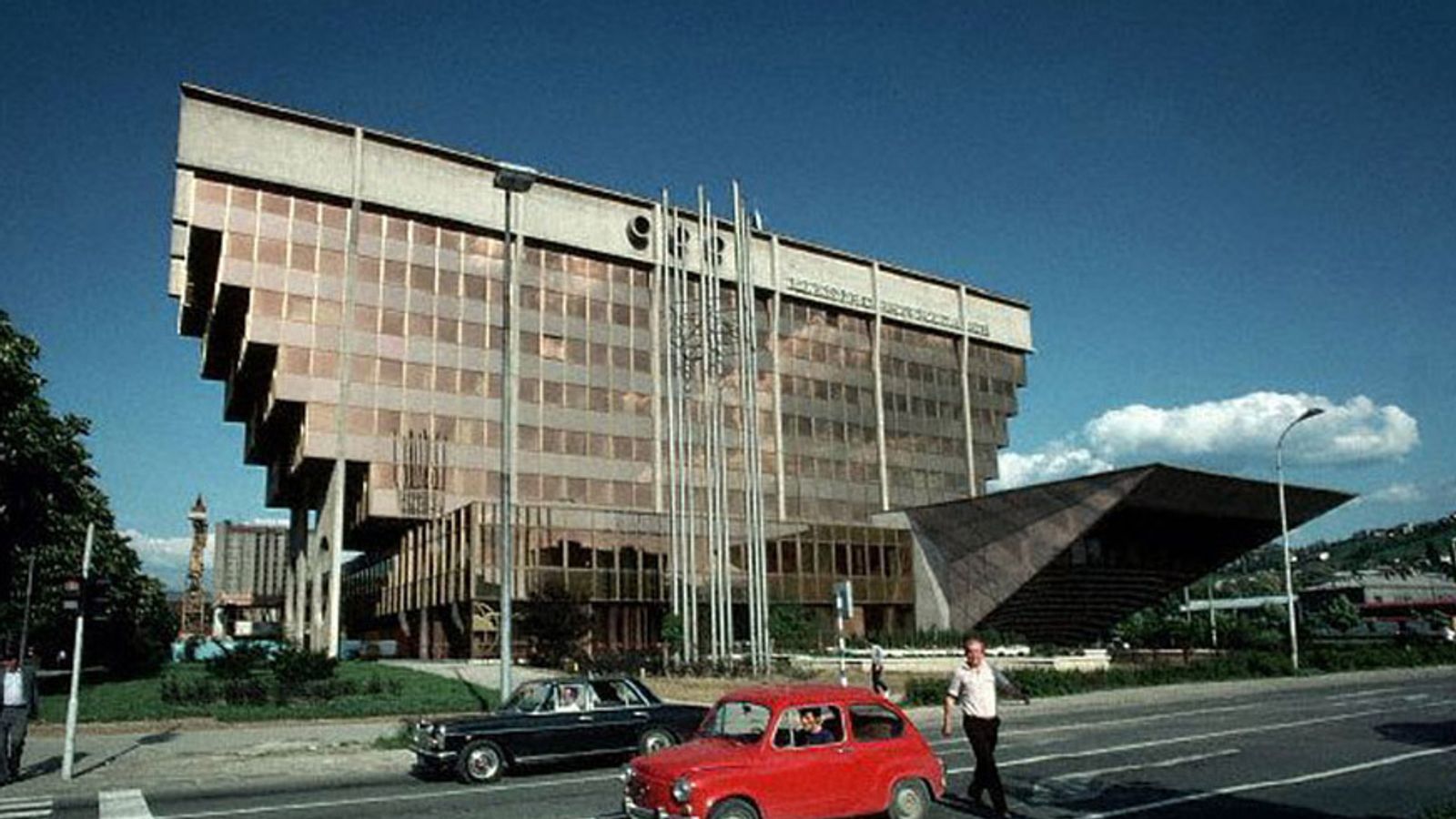
At first glance, the Lake Hotel Tunis Elektroprivreda Sarajevo architecture comparison seems unexpected. The Lake Hotel rises along the shores of Tunis Lake, shaped by Mediterranean light. Meanwhile, the Elektroprivreda Building stands in a Balkan valley marked by dense urban layers and a complex past.
However, a closer look reveals a strong visual connection. In fact, the two buildings mirror each other across distance.
A shared modernist vision
Both projects belong to a period when late modernism became more expressive. In particular, they draw from Brutalism, rejecting ornament and emphasizing raw presence.
Although Raffaele Contigiani and Ivan Štraus worked in different contexts, they followed similar ideas. Instead of treating mass as static, they made it dynamic. As a result, their buildings project tension, movement, and imbalance.
Sculptural forms and inverted logic
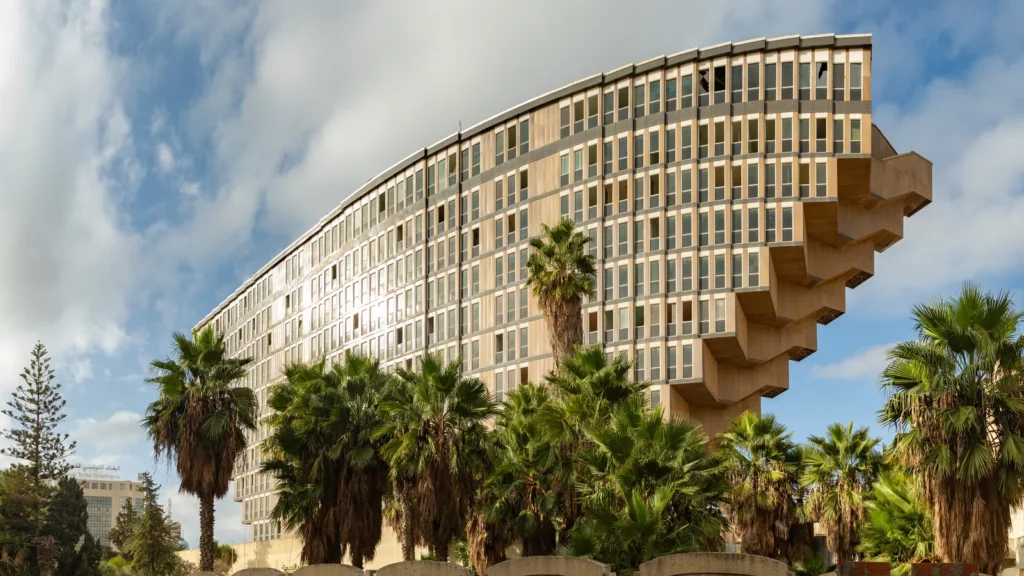
The Lake Hotel takes the form of an inverted pyramid. As a result, its upper floors extend outward in a bold gesture. This creates a strong sense of suspension. Moreover, it turns the structure into a sculptural object rather than a conventional building.
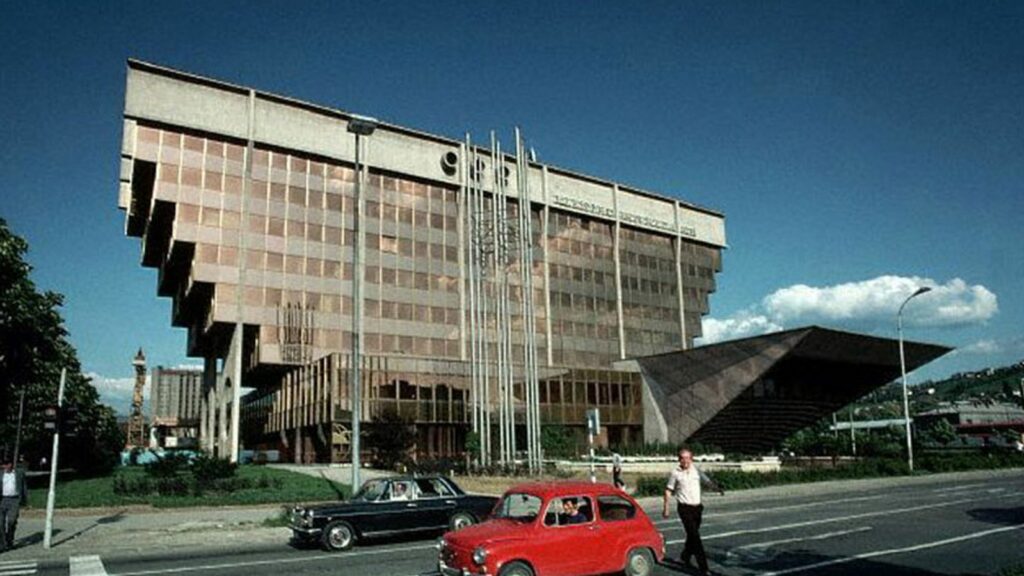
Similarly, the Elektroprivreda headquarters follows a comparable approach. Its volumes shift and stack in unexpected ways. Consequently, this breaks the vertical rhythm and creates movement through angles and displacement.
Concrete as a shared language
Concrete defines both buildings. Instead of concealing it, the architects chose to expose it. Because of this, the material highlights structure and strength.
At the same time, light interacts with the rough surfaces. It creates depth and shadow. Therefore, these effects reinforce the sculptural identity of each structure.
Architecture and historical context
Each project reflects a moment of transformation. On one hand, the Lake Hotel emerged in post-independence Tunisia. It expressed openness and a desire for modernity.
On the other hand, the Sarajevo headquarters developed within Yugoslavia. In that context, architecture often symbolized progress and collective identity.
Two buildings two destinies
Even though their forms align, their histories diverge. The Lake Hotel closed in 2000 and remains abandoned today. As a result, it stands between decay and preservation debates.
By contrast, the Sarajevo building suffered heavy damage during the Bosnian War. Nevertheless, the city later restored it and reintegrated it into daily life.
A dialogue beyond geography
Ultimately, these buildings create more than a visual parallel. Instead, they form a dialogue shaped by time, memory, and context.
While one structure moves toward disappearance, the other demonstrates resilience. In this way, they connect Tunis and Sarajevo through a shared architectural vision.