

Taher Bekri: Navigating Identity through Exile and Poetry
Written by Rihab Amri, Archive of Taher Bekri
Exile, more than a physical displacement, is both a curse and a muse. It’s emotional and psychological toll has shaped some of the most profound voices of literature. For poets, it become a luminal space where personal loss and cultural disconnection intersect, leading to works that explore themes of belonging, memory, and resilience.
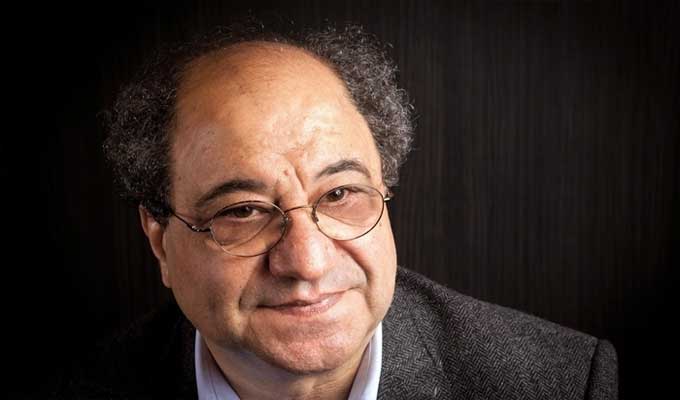
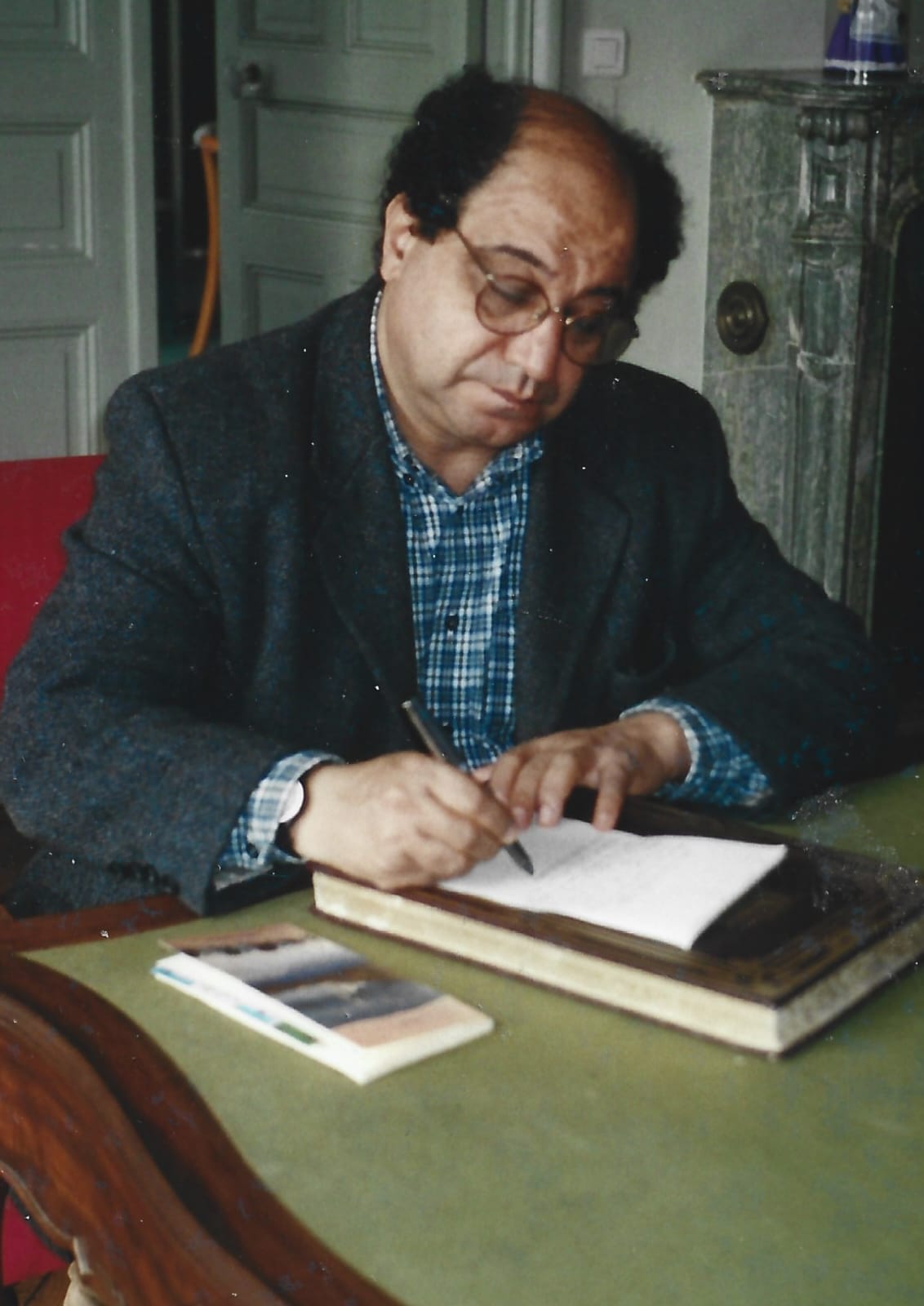
Taher Bekri, a Tunisian poet and intellectual born in Tunisia and originally from the coastal city of Gabes, was forced into exile in the 1970s. Bekri lived a life marked by profound displacement, reflection and creativity. His poetic works navigate themes of exile, belonging, cultural adaptation and the human condition. Through his poetry, Bekri articulates the struggles and nuances of living in exile, while exploring the broader struggles faced by humanity. His journey
from Tunisia to France, from exile to poetic expression, is not merely a personal narrative but one that resonates deeply with the collective experiences of those displaced and those seeking identity in a globalized world.
Exile: The Pain, the Freedom, and the Poetry
Taher Bekri’s exile was not by choice. In 1975, he was imprisoned in Tunisia, for his political activism and opposition to the regime of Ben Ali. As a poet and intellectual, he was involved in expressing views that challenged the political status quo. A period that marked the beginning of his forced departure to seek refuge in France.
“Exile was not a product of my imagination,” he reflects, his eyes momentarily gazing into the distance, carrying the weight of memories left behind.
He arrived in 1976 at the age of 25 with a heart heavy with sorrow for the country he had left behind. In the beginning, his poetry was filled with a deep sense of loss and longing for Tunisia.
“The first poems I wrote in France were marked by heavy nostalgia and deep sadness. One of them was titled My Country, the Wound.”
His first poetry collection, Le Laboureur du soleil (1983), is soaked in the grief of exile.
“I was crossed by a feeling of pain for the country I left,” he says. “The country I loved.”
This was a poet who felt both the sting of separation and the struggle to understand the emotional weight of leaving everything behind. Yet, over time, Bekri managed to find a sense of resilience.
“Exile is a hard craft,” he states, echoing Nazim Hikmet’s sentiment, “but it must be lived with dignity.” He expressed with a firm nod.
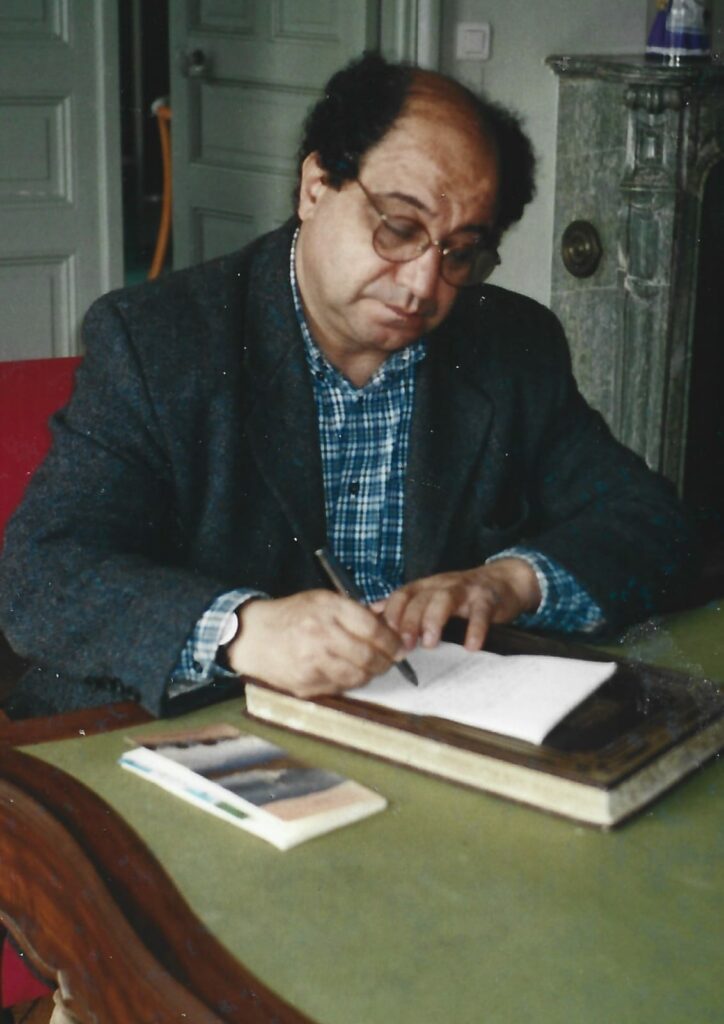
It was through his poetry that Bekri worked through the pain, choosing to view exile not as a defeat but as a freedom to explore new possibilities.
“There was a kind of melancholy that had to be overcome, a daily struggle against the absence of those I love, a need to pull myself out of despair in order not to sink—to write, to live with dignity, and to consider exile as an act of freedom.” Bekri expressed.
“Little by little, I had to free myself from this nostalgia and mature the poetic expression of exile into other forms, seeking a less direct expression.” He adds, his gaze softening.
His poems soon shifted from raw melancholy to something more transformative. He didn’t just mourn the past; he looked ahead, growing beyond nostalgia and into new forms of expression. Exile, for Bekri, became both a necessity and an act of liberation.
The Duality of Identity and the Freedom of Cultural Mobility
One of the most striking aspects of Bekri’s work is how he tackles the question of cultural identity. Unlike many who experience exile and feel a sense of being caught between two worlds, Bekri was never torn by the idea of belonging.
“Even in Tunisia,” he says, “I always made sure to be open to other cultures.”
This openness didn’t change when he arrived in France; it was simply a continuation of a worldview that had already been shaped by multiculturalism. He never felt threatened by his identity but instead saw it as something fluid and evolving.
“It posed no threat to my identity; on the contrary, identity mobility is richness and a necessity, countering what risks becoming immutable, closed, static, and, ultimately, doomed to disappear or wither away.” he reflects, rejecting the idea of a fixed, static self.
For Bekri, embracing different cultures didn’t erase his Tunisian roots; rather, it enhanced his sense of self, allowing him to grow and understand the world on a deeper level.
“Exile intertwines with wandering, travel, discovery, intersections, and shared connections. I strive to reverse the North-South relationship into South-North, becoming less static in cultural memory. This back-and-forth between my homeland and the journey toward the Other has become a writing duty—an opening to the world, a sense of belonging to the universal. I feel connected to all issues affecting humanity, wherever and whoever it may be. From the 1980s onward, I was fortunate to travel extensively, which taught me both the diversity
and unity of the human experience.” he concludes, his voice trailing off as his gaze shifts downward, lost in thought.
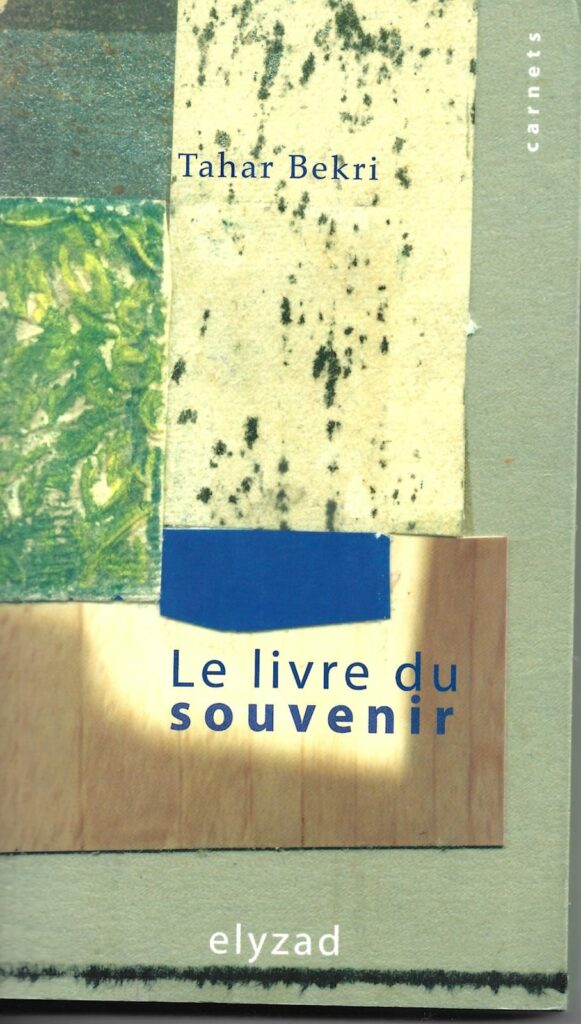
In fact, Bekri’s poetry is a reflection of this fluid, evolving identity. As he navigates between his homeland and his new home in France, he sees both as essential parts of who he is. “The world is wonderful,” he says, emphasizing that it would be “unnatural” to love only one’s own landscape. His poetry, particularly in Le Livre du souvenir, reflects his belief that all places are valuable, and all experiences contribute to the richness of human existence. His identity is not confined to Tunisia, nor is it fully absorbed by France; it exists in a space between, a space where the world’s diversity becomes a source of inspiration and poetic energy.
From National Memory to Universal Concerns: The Politics of Poetry
While Bekri’s poetry is undeniably shaped by his personal experience of exile, it is also deeply engaged with the world around him. He doesn’t view his poetry as a personal outlet for self-expression alone; it is a way to engage with the world’s problems, its injustices, and its triumphs. “Poetry is not just about exile,” he says.
“It is called upon morning and night by the fury of the world, its intolerance, its injustice.” he adds, his voice firm, while a sharp tilt of his head underscores the bitterness of his reflection.
Bekri’s poems are not isolated from the global landscape; they are a response to the political and social turmoil that shapes our collective experience.
His poetry speaks to the larger struggles of humanity—whether it is the oppression of women in Tunisia, the violence of war, or the arrogance of those in power.
“The poem,” he reflects, “is called upon to face the world’s violence, its tyranny, and its wars.” For Bekri, the poet is not just a passive observer but an active participant in the struggle for justice and freedom. His work is imbued with a moral urgency to address these issues, while also exploring the more metaphysical questions of life, love, and death.
“The poet’s role is to help navigate the darkness,” he says, “and brings light to it, like a lamp in the dark night.” he says, leaning slightly forward, his voice low and measured.
Tunisia in the Rearview Mirror: A Changing Perspective
Bekri’s connection to Tunisia remains strong, despite the distance that separates him from his homeland. His work continues to reflect Tunisia’s struggles and triumphs, but his perspective has evolved over time.
“The last time I visited Tunisia was in 2019,” he shares, expressing concern over the country’s political climate. He worries about the threat to Tunisia’s modernity, the regression of women’s rights, and the growing influence of conservative forces.
“The fight for Enlightenment is a duty against the dark forces that want to pull our country backwards,” he declares, straightening up, his eyes flashing with determination.
“Conservative forces are at work to undo progress in a regressive movement, to the point where many people long for the good old days (العهد الجميل), as if it were a bygone era. Yet it is a regret for the recent past, because the present is bleak, filled with all kinds of prohibitions.” He pauses, exhaling deeply, his shoulders drooping slightly “There is no enthusiasm, and it pushes the individual to indifference and disenchantment. This defeat is serious.”
His concern for Tunisia’s future is not just a reflection of political engagement but a desire to see his homeland progress in a way that reflects the best of its culture and history. In his poetry, he strives to reconcile his love for Tunisia with the reality of its challenges, portraying it as a place of beauty but also as a space where struggle and resistance are necessary.
A Message to the Exiled: Poetry as Light in the Darkness
Through all of his struggles—whether personal, political, or artistic—Bekri’s message to those living in exile is one of hope.
“Exile is not a rule,” he says. “It is an experience that poetry tries to translate through human emotions.”
His poetry is a light that illuminates the darkness, a way to make sense of the chaos and confusion that often accompany displacement.
“Poetry is a quest,” he explains, “a need to dissipate the darkness and to bring clarity, much like a lamp lighting the dark night.” he finishes, his voice softening, his hand mimicking the gentle rise of a light in the distance.
His work invites readers—whether exiled or not—to find meaning, to reflect on their own lives, and to search for beauty and truth in the world around them.
In the end, Taher Bekri’s poetry is a testament to the resilience of the human spirit. His life—marked by exile, loss, and longing—is a journey of transformation, one that he shares with the world through his words. His work transcends borders, and his voice resonates deeply with anyone who has ever felt displaced, lost, or in search of belonging. Through his poetry, Bekri not only gives voice to the experience of exile but also offers a vision of hope, resistance, and the possibility of a more connected, enlightened world.
Post a Comment