



Nomad Man!
Nomad Man takes place once a year over a three day and three night period, scheduled this year from 30 January to 2 February 2026, in the Sahara of southern Tunisia. The gathering is held at Tiniri Camp in the Grand Erg Oriental, several hours south of Douz, and is accessible only through coordinated desert transport. Its fixed temporal window, remote location, and selective participation define it as a rare and time bound opportunity rather than a recurring or continuously accessible destination. For readers seeking an experience that combines cultural practice, collective living, and direct engagement with an extreme landscape, the event offers a clearly delimited moment in which such encounters can occur.
Nomad Man is a temporary cultural gathering situated in the Sahara region of southern Tunisia near the town of Douz. It is conceived as a limited scale and selective experience that unfolds over three days and three nights within a geographically isolated environment. Rather than adopting the structure of a conventional festival the gathering is organized as a curated journey in which artistic practices wellness activities and collective living are integrated into the specific conditions of the desert landscape. The event operates on the premise that spatial remoteness and environmental constraint can function as productive frameworks for cultural and social experimentation.
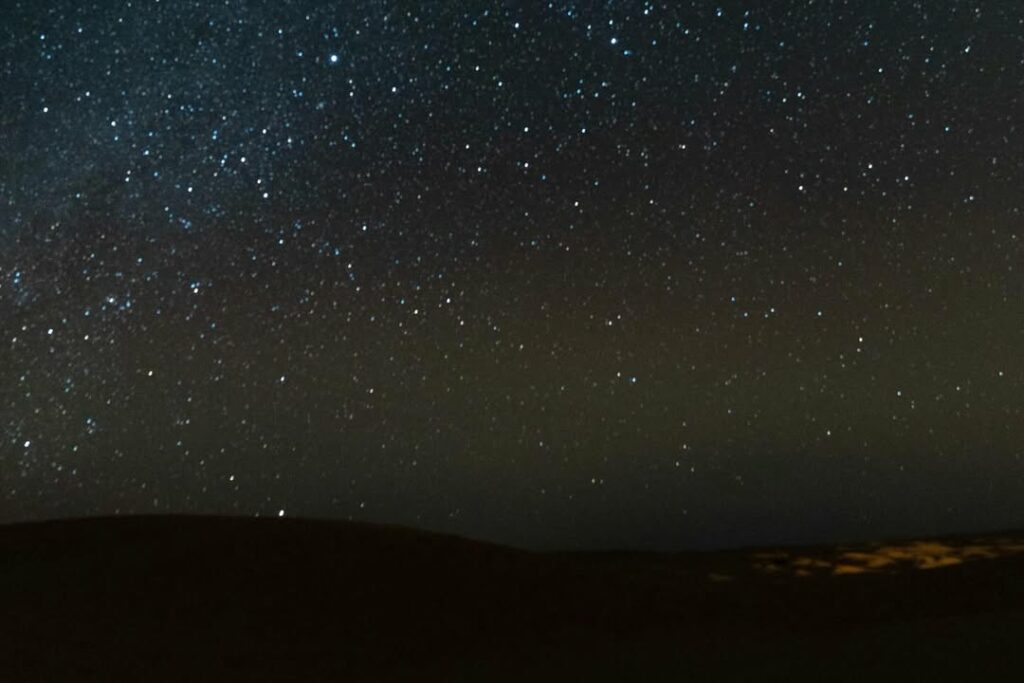
The location of Nomad Man plays a central role in shaping the experience. The site known as Tiniri Camp is located deep within the Grand Erg Oriental and is accessible only through coordinated travel involving long distance road transport followed by guided four wheel drive navigation across sand dunes. This process of access establishes a gradual transition from urban space to desert territory and contributes to a heightened awareness of distance and disconnection. The absence of mobile network coverage at the site further reinforces this separation and reorients social interaction toward direct presence and shared situational awareness. In this context space is not treated as a neutral setting but as an active agent that structures movement perception and social relations.
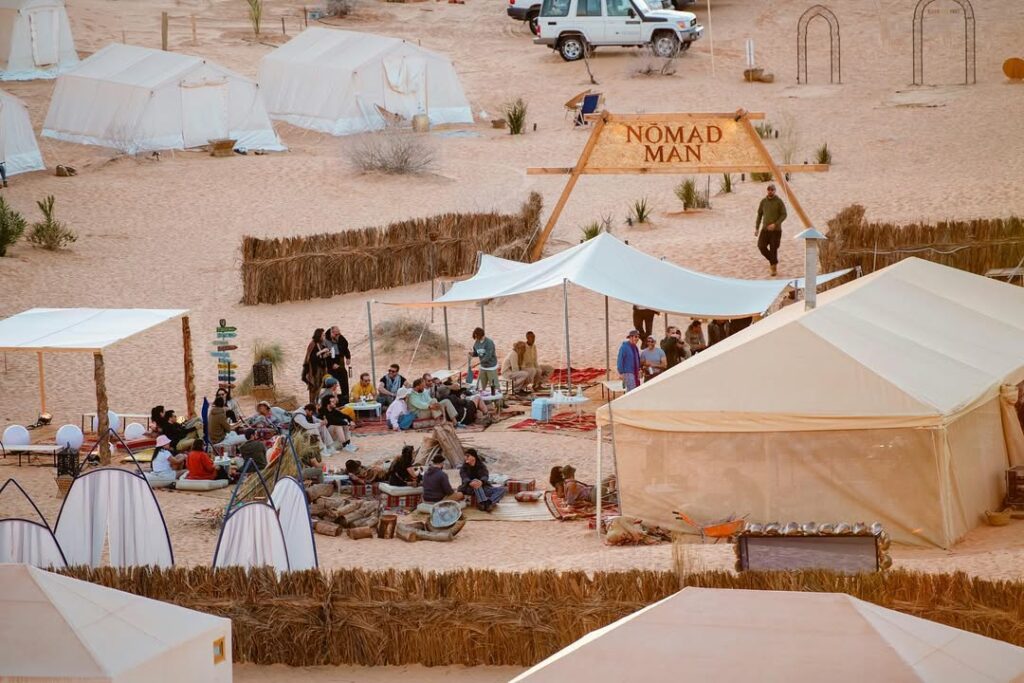
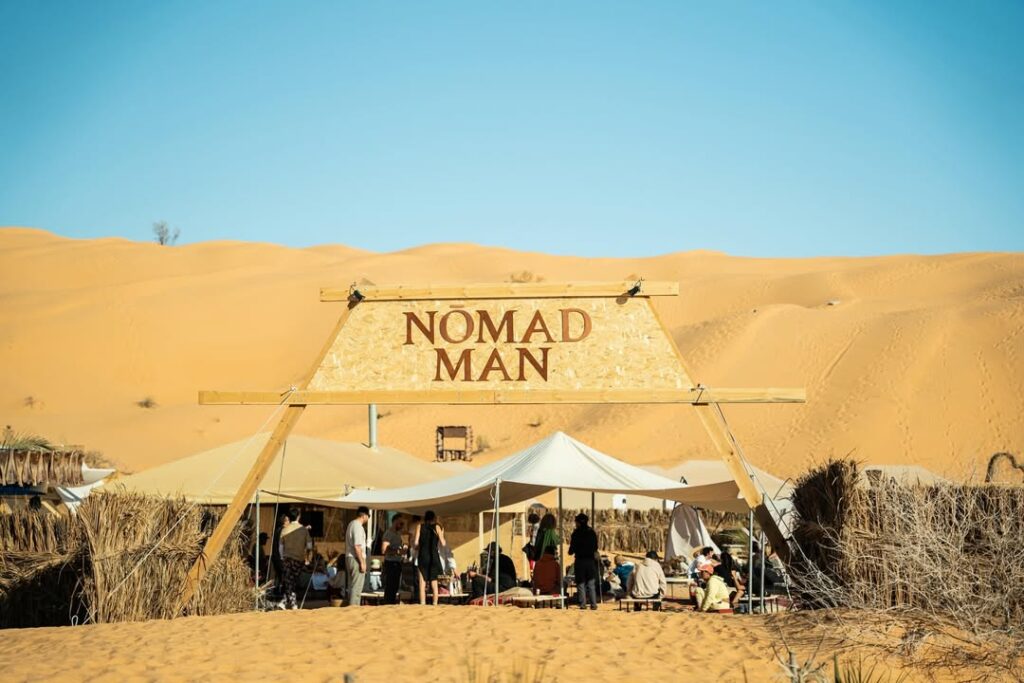
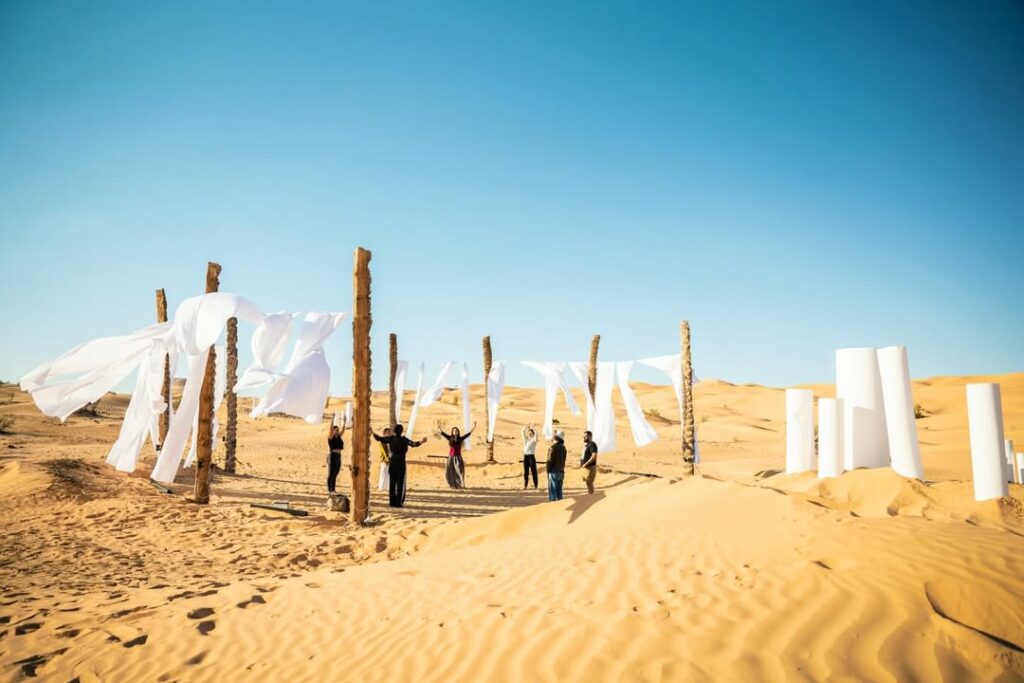
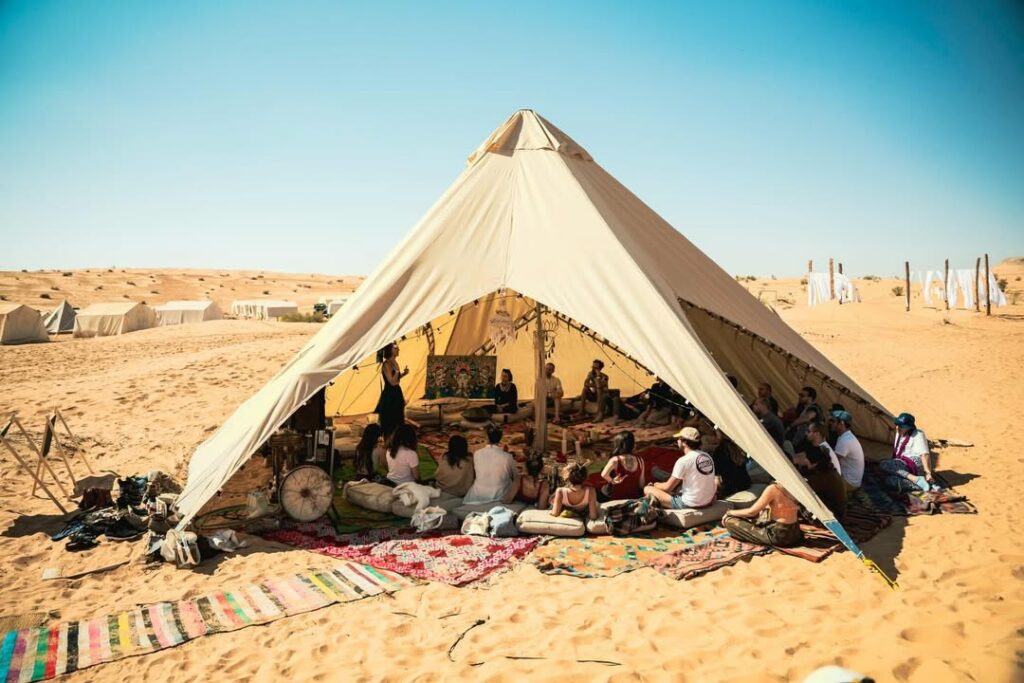
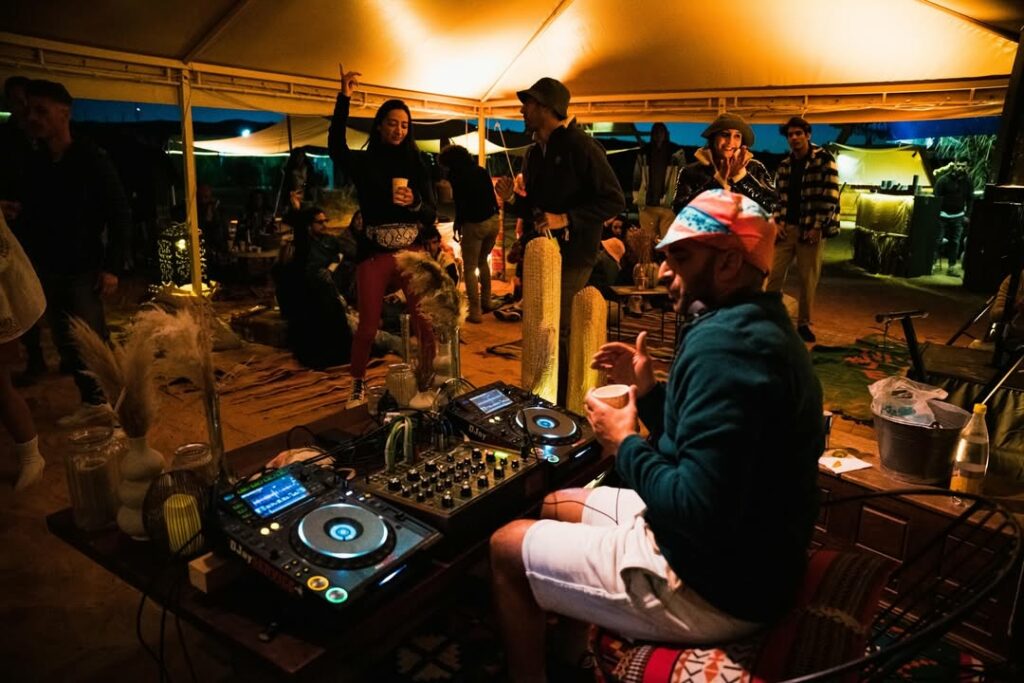
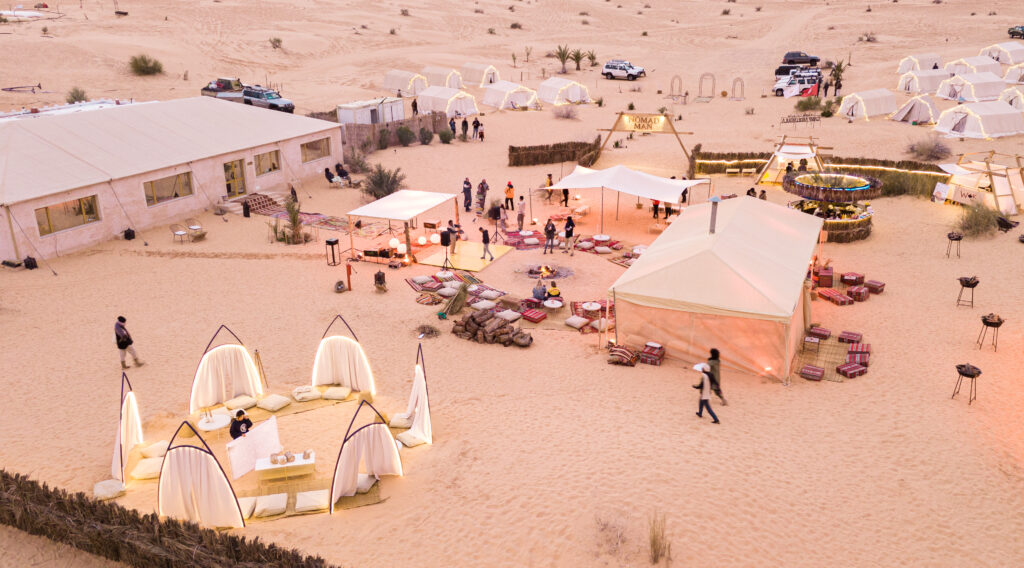
The camp is organized as a temporary settlement composed of accommodation units communal facilities and open gathering areas distributed across the desert terrain. The spatial arrangement encourages circulation between zones of rest collective activity and exposure to the open landscape. Participants experience varying degrees of intimacy and openness depending on their movement within the camp and their engagement with the surrounding environment. The desert itself becomes an extension of the living space rather than a distant backdrop.
Time within Nomad Man is structured by both environmental conditions and collective rhythms rather than fixed schedules. The limited duration of three days and three nights produces an intensified temporal experience in which activities are closely interwoven. Daytime periods are generally oriented toward physical practices workshops and exploration while nighttime periods host music visual practices and collective gatherings. This alternation responds to temperature light and sensory conditions specific to the desert and contributes to a perception of time as cyclical and situational rather than linear and segmented.
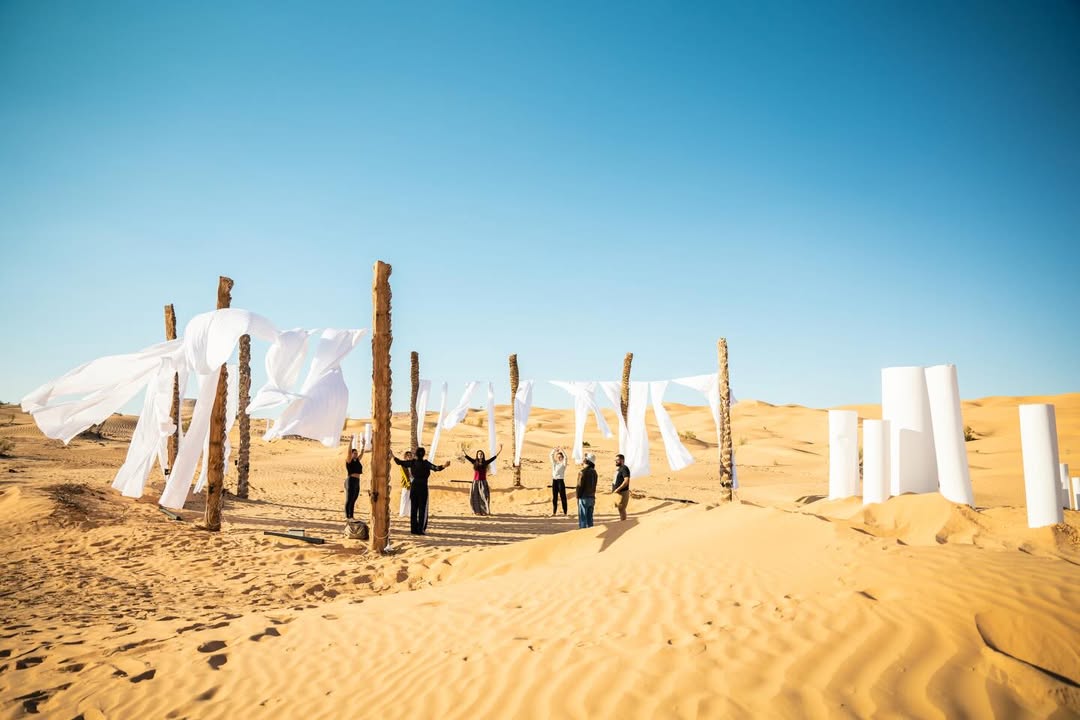
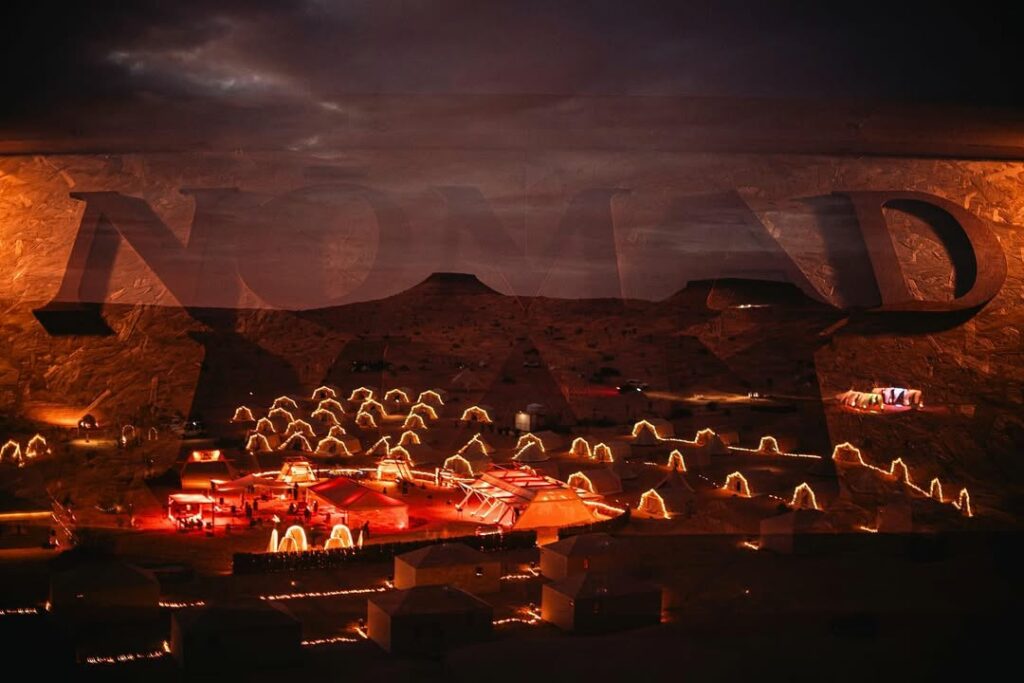
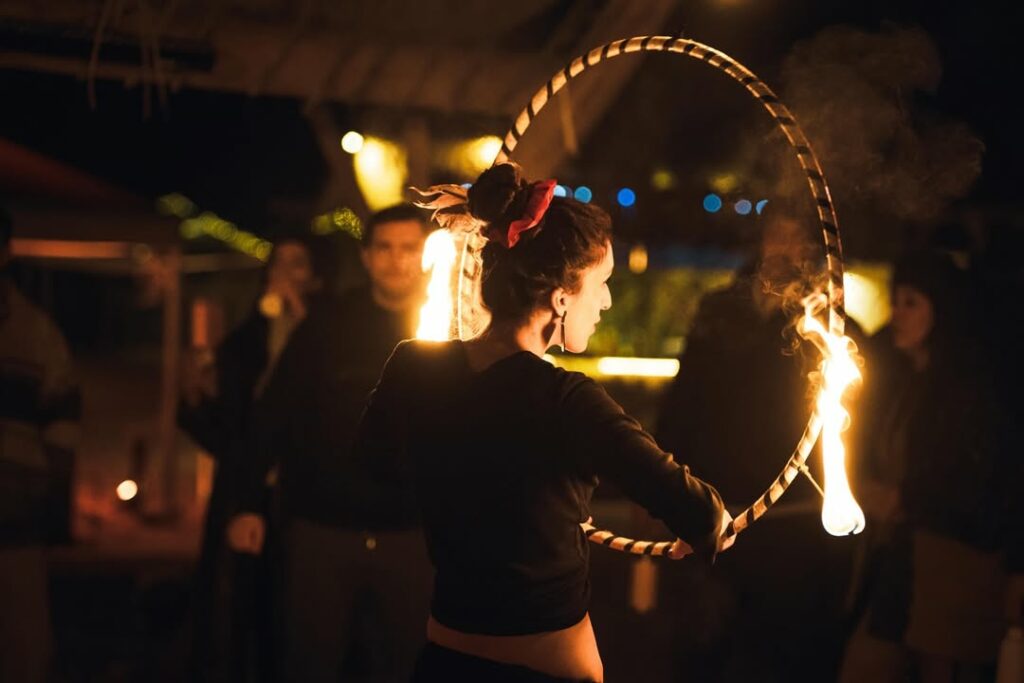
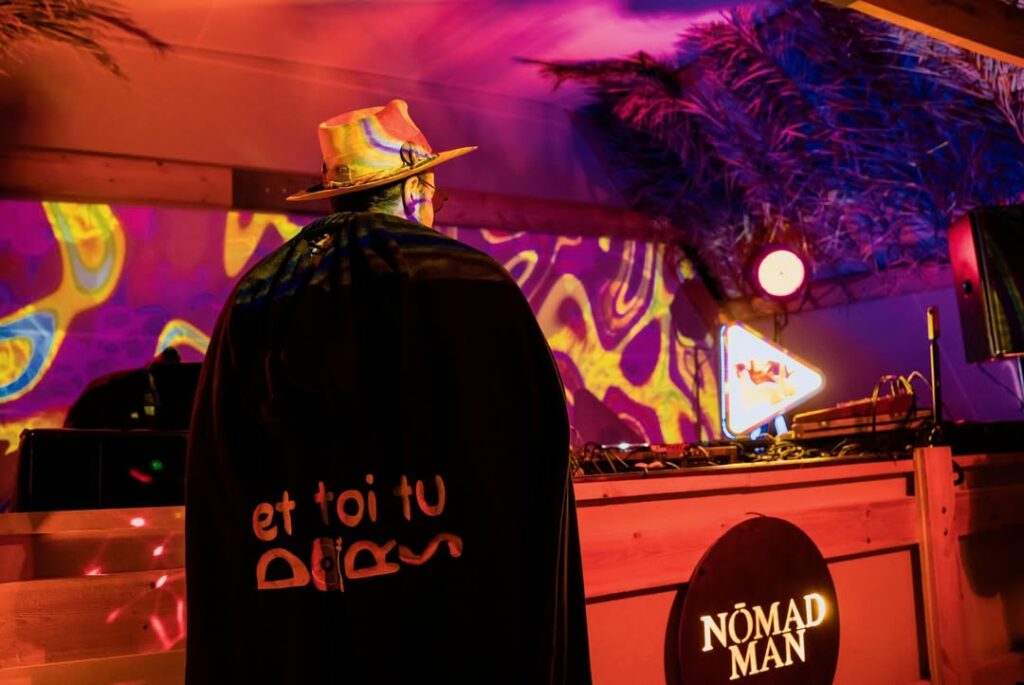
The program integrates cultural production wellness practices and forms of exploration in a manner that avoids strict separation between domains. Musical performances visual mapping cinema projections and performative arts are presented in open settings where distinctions between performers and participants remain fluid. Rather than functioning as spectacles these practices are embedded within the collective life of the camp and often interact directly with the surrounding landscape. Visual elements such as projections and light based interventions engage the material qualities of sand darkness and open space creating transient spatial configurations.
Wellness practices occupy a significant place within the gathering and include yoga meditation breathwork body alignment and therapeutic sessions. These practices emphasize attention to the body respiration and stillness and are often conducted in open or minimally structured spaces. In the desert context such practices take on particular significance as they mediate the relationship between the individual body and the expansive environment. Both collective sessions and individual encounters are offered allowing participants to navigate different modes of engagement.
Exploration activities are closely linked to the physical characteristics of the Saharan environment. Guided mobility experiences and introductory encounters with desert navigation and vehicles frame the desert as a space requiring knowledge adaptation and respect. These activities do not position exploration as conquest but as a process of learning to move within environmental limits and to rely on local expertise.
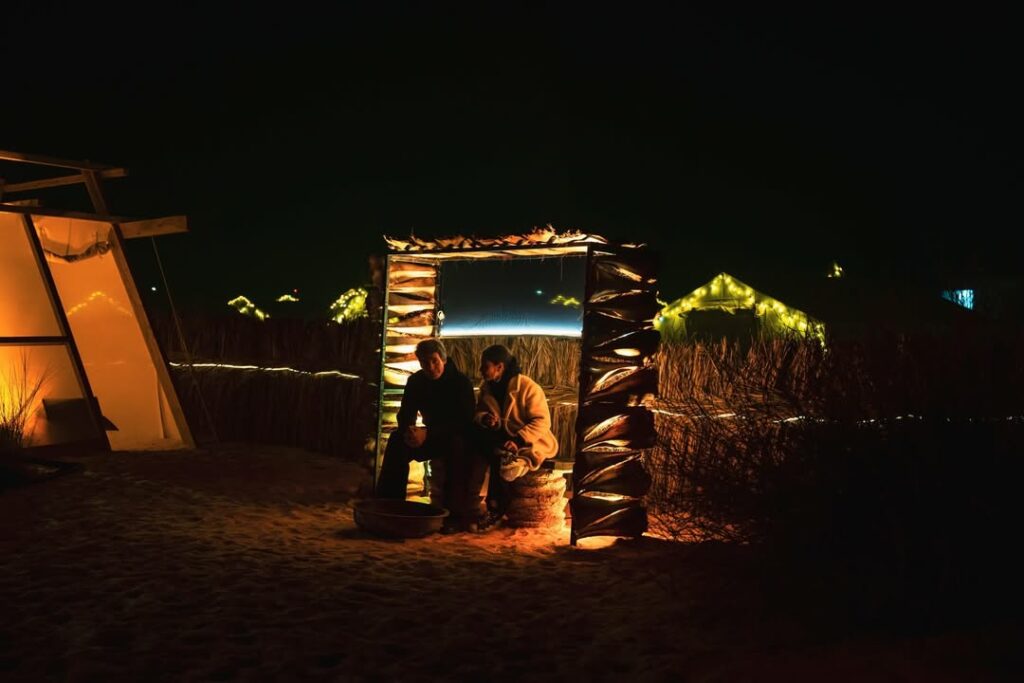
Accommodation within the camp is organized into multiple forms reflecting different relationships to comfort autonomy and exposure. Some participants inhabit structured units equipped with private facilities while others reside in shared tents or practice wild camping using basic equipment. This diversity of living arrangements creates a layered social environment in which varying degrees of comfort coexist. Despite these differences participants share communal spaces meals and activities which reinforces a sense of collective belonging.
A clearly articulated ethical framework governs life within the camp. Environmental responsibility is emphasized through waste reduction practices controlled resource use and restrictions on individual movement in the desert. Safety is addressed through collective awareness and coordination rather than external enforcement. Participants are encouraged to take responsibility for themselves and for others recognizing the risks associated with isolation and unfamiliar terrain. The absence of digital connectivity amplifies the importance of mutual reliance and situational communication.
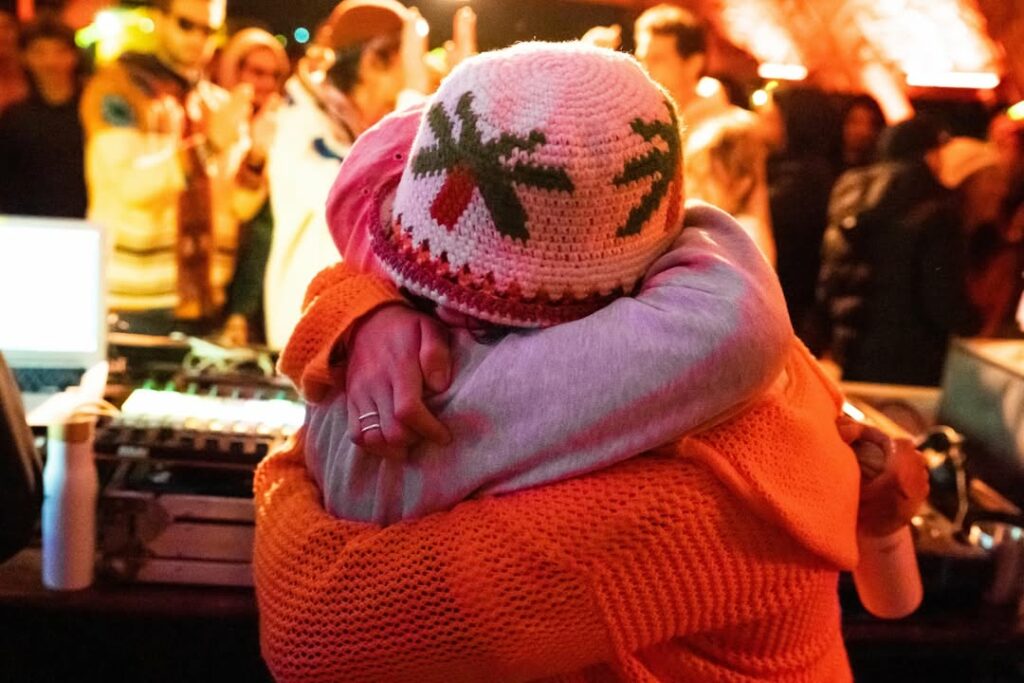
Community formation within Nomad Man is shaped by selectivity limited scale and shared experience. The relatively small number of participants allows for repeated interaction over a short period of time fostering familiarity and informal social bonds. Shared challenges such as heat travel and adaptation to desert conditions contribute to a sense of collective effort. Artistic and wellness practices function not only as activities but as social interfaces through which participants connect exchange and collaborate.
Post a Comment