





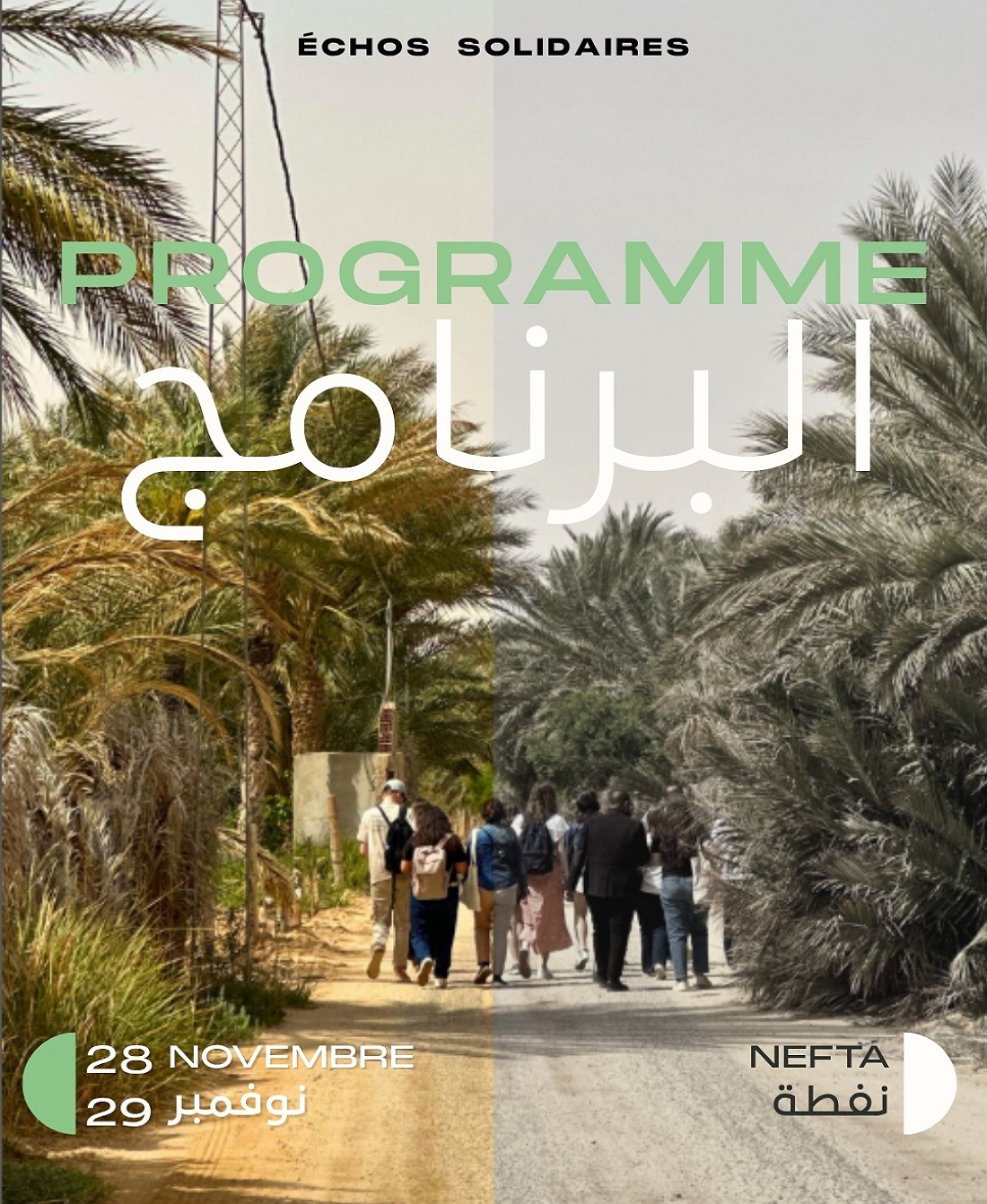
Échos Solidaires 2025: The Social and Solidarity Economy as a Lever for Territorial Climate Adaptation
Échos Solidaires 2025 takes place in a moment marked by accelerating climatic, social, economic, and territorial transformations. According to the event’s programme, the effects of climate change are already visible across Tunisia, disrupting ecological balances, threatening economic activities, and intensifying issues of social justice, access to resources, and territorial solidarity. Climate change is therefore not only an environmental concern; it intersects with questions of gender, culture, collective organisation, and labour. In this context, the core inquiry of the 2025 edition asks how the social and solidarity economy (SSE), through its organisational forms, its values, and its territorial embeddedness, can actively contribute to climate adaptation. This question positions the SSE as a key actor in systems transformation rather than a peripheral sector.
The choice of Nefta, an oasis in southwestern Tunisia that is simultaneously vulnerable to climatic pressures and rich in collective initiatives, anchors the event in a specific territorial reality. Oasis ecosystems face acute challenges such as water scarcity, salinisation, and shifting economic models. At the same time, Nefta hosts a dynamic network of associations, agricultural groups, cooperatives, cultural spaces, and youth led initiatives. These actors illustrate how local forms of cooperation can inform broader strategies for resilience and ecological transition.
The structure of Échos Solidaires reflects this ambition to create a multidimensional space of inquiry. The first day of the event brings together scientific knowledge, territorial narratives, and political perspectives. Testimonies from residents and practitioners are paired with climate data to produce shared understandings of changes already underway. Workshops gather researchers, SSE representatives, and field actors to examine concrete initiatives, evaluate their effectiveness, and identify conditions for replication or adaptation in other contexts. This approach demonstrates that adaptation requires not only information but also spaces where knowledge can be collectively interpreted and translated into action.
The workshop dedicated to understanding territorial vulnerabilities highlights the limits of traditional diagnostic tools. Participants are invited to rethink methods of reading and representing territorial transformations by integrating scientific research, local knowledge, and the lived experience of economic and social initiatives. The objective is to transform existing studies and analyses into instruments of collective ownership, enabling communities to coconstruct shared visions of their future. This epistemic dimension is essential because adaptation strategies must be rooted in inclusive, situated, and participatory knowledge production.
Another workshop focuses on collective practices within the SSE. Across Tunisia, cooperatives, associations, social enterprises, citizen collectives, and local networks attempt to respond to economic, social, and ecological needs in ways that differ from traditional market or state approaches. Their capacity to adapt, often out of necessity, reveals forms of organisational flexibility that align with climatic uncertainty, such as seasonality, resource fluctuations, and community interdependence. By examining initiatives such as Ftartchi, the Tunisian Permaculture Association, Dar El Ain, and IN Nefta, the event explores how attention to local resources, cultural rhythms, and shared meanings can strengthen resilience. These initiatives demonstrate that social innovation often emerges from constraints and that collective autonomy can become a driver of ecological and economic sustainability.
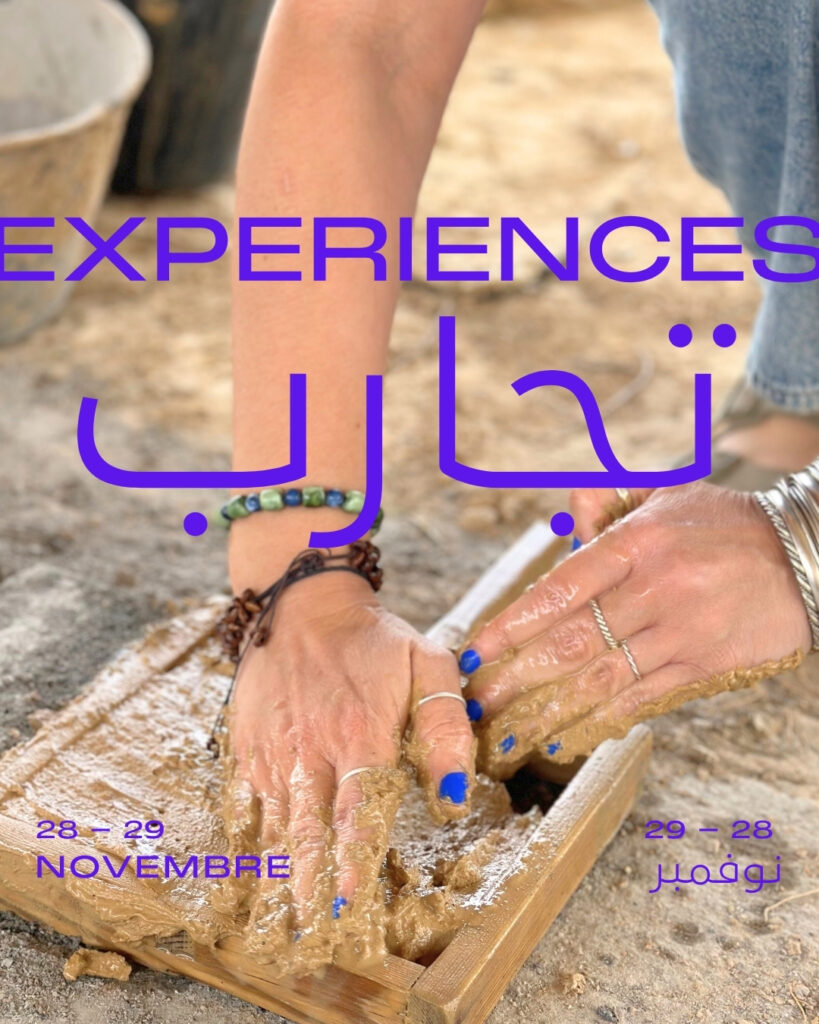
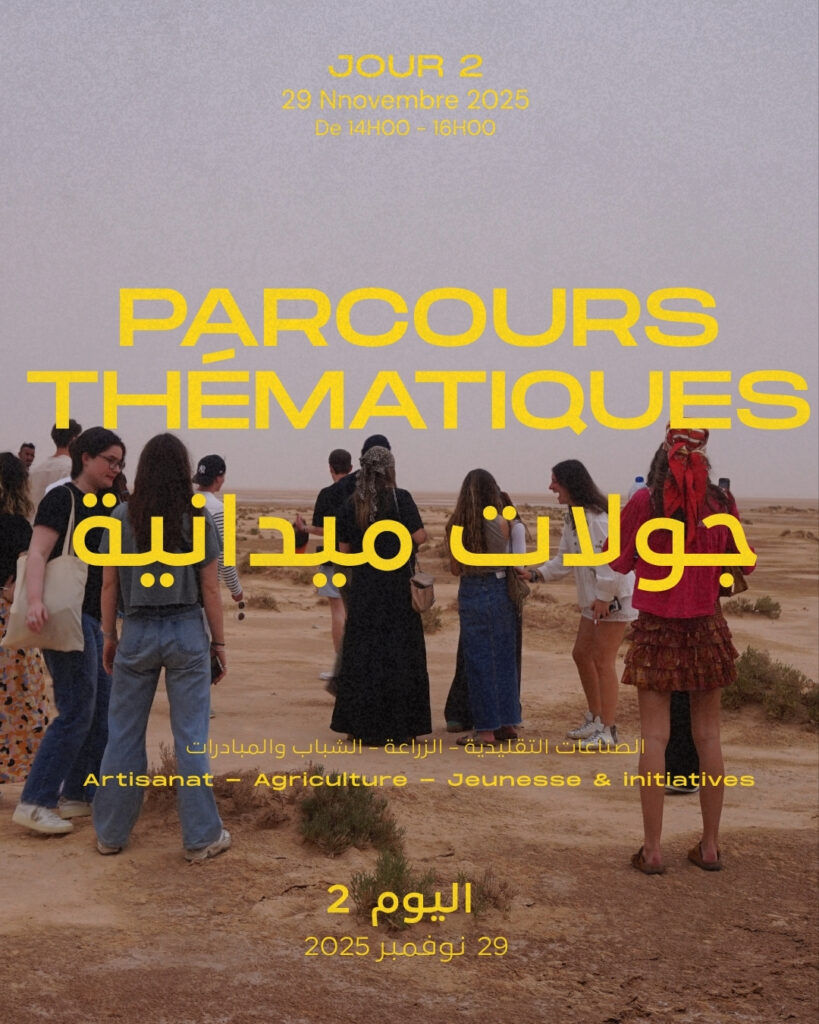
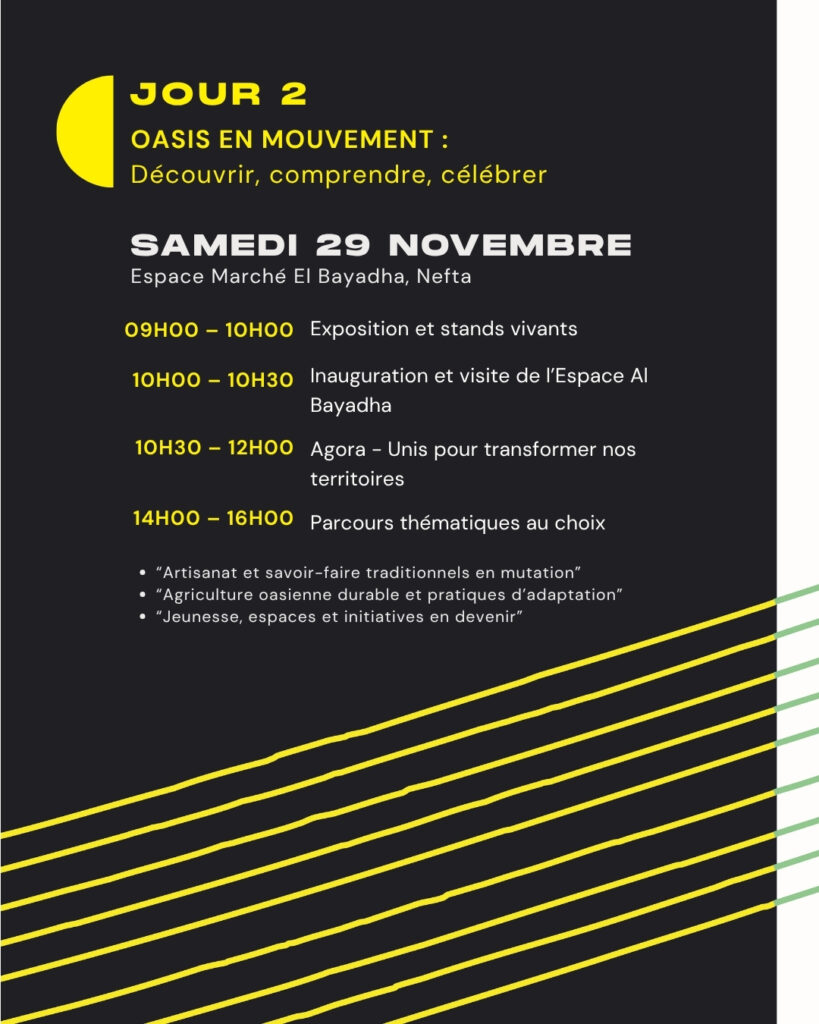
The public day of the event extends this exploration by highlighting local practices through exhibitions, open stands, and thematic pathways in Nefta. One pathway focuses on traditional crafts and their contemporary reinvention. Workshops such as the El Mensej weaving space illustrate how heritage skills are being reinterpreted by women and young creators, turning craftwork into a source of economic independence, cultural affirmation, and environmental sustainability through the use of natural materials and durable production processes. Another pathway addresses sustainable oasis agriculture, showcasing farmers, agricultural development groups, and associations engaged in diversification, circular economy practices, agrotourism, and the valorisation of local products. These practices demonstrate how ecological transition can emerge from grassroots cooperation between producers, citizens, and territorial organisations. A third pathway sheds light on youth initiatives and the role of shared spaces, such as youth centres, local associations, and educational hubs, in enabling young people to gather, create, and develop civic, artistic, and social projects. These spaces reveal both the aspirations and the constraints faced by youth and encourage reflection on how to design more inclusive territorial dynamics.
Across these diverse activities, Échos Solidaires 2025 advances a broader understanding of what climate adaptation means. It suggests that adaptation is not merely a technical process involving infrastructure or environmental management, but a collective reconfiguration of social relations, economic models, and cultural practices. The principles embodied by the SSE, including cooperation, mutual aid, shared governance, plural knowledge, and territorial anchoring, form a grammar of adaptation that contrasts with competitive or individualistic models. Resilience is conceptualised as relational and community based rather than solely technological.
Through its methodology and its immersion in the lived realities of Nefta, the event demonstrates that effective climate adaptation must emerge from the territories themselves. When communities have opportunities to meet, analyse their experiences collectively, share knowledge, and build alliances, they are better positioned to confront crises and imagine alternative futures. Échos Solidaires 2025 thus illustrates how the social and solidarity economy can contribute to climate adaptation by linking ecological transition with social justice, community empowerment, and economic innovation. Far from being a marginal experiment, the event offers a reproducible model for other regions facing similar climatic and socioeconomic challenges.
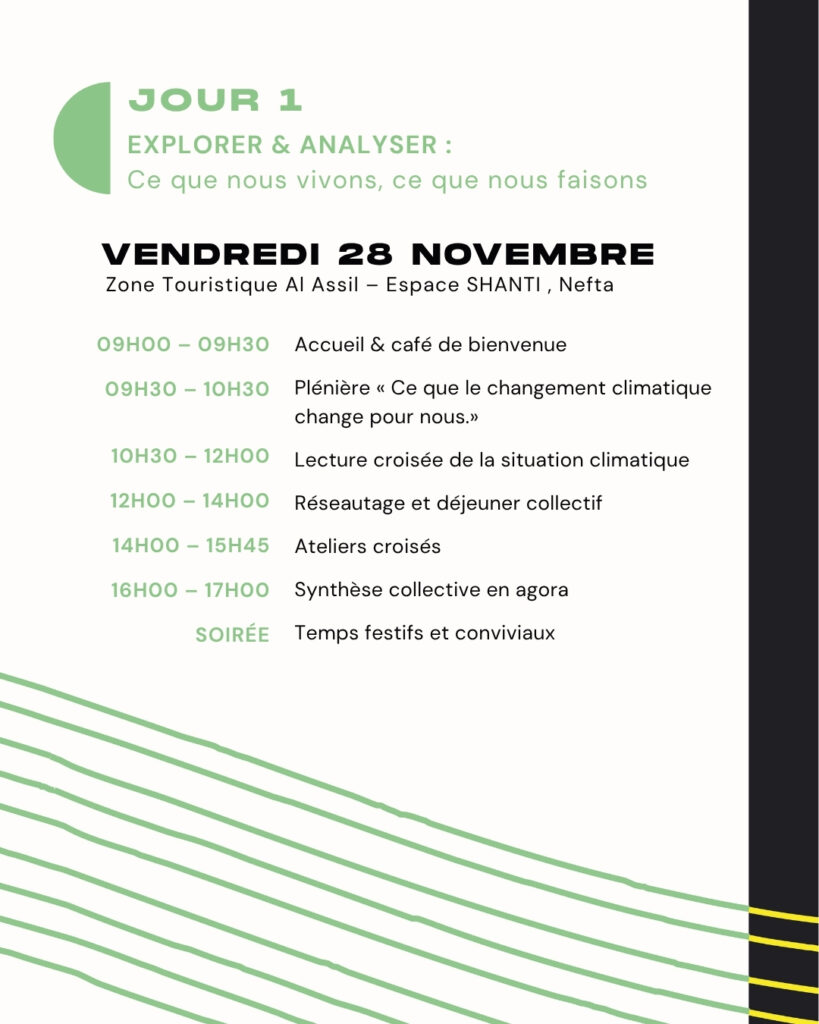
Explore the Échos Solidaires Website for full details and updates.
Post a Comment