


¡Hola Túnez!
Led by the Spanish Embassy in Tunisia in collaboration with AECID, the International Music Festival ¡Hola Túnez! launches a call for participation that goes beyond a simple open invitation. Rooted in a broader vision of cultural diplomacy and exchange, the initiative proposes a framework where transmission, performance, and artistic dialogue intersect, offering Tunisian DJs an opportunity to engage with an international network while remaining anchored in their local scene.
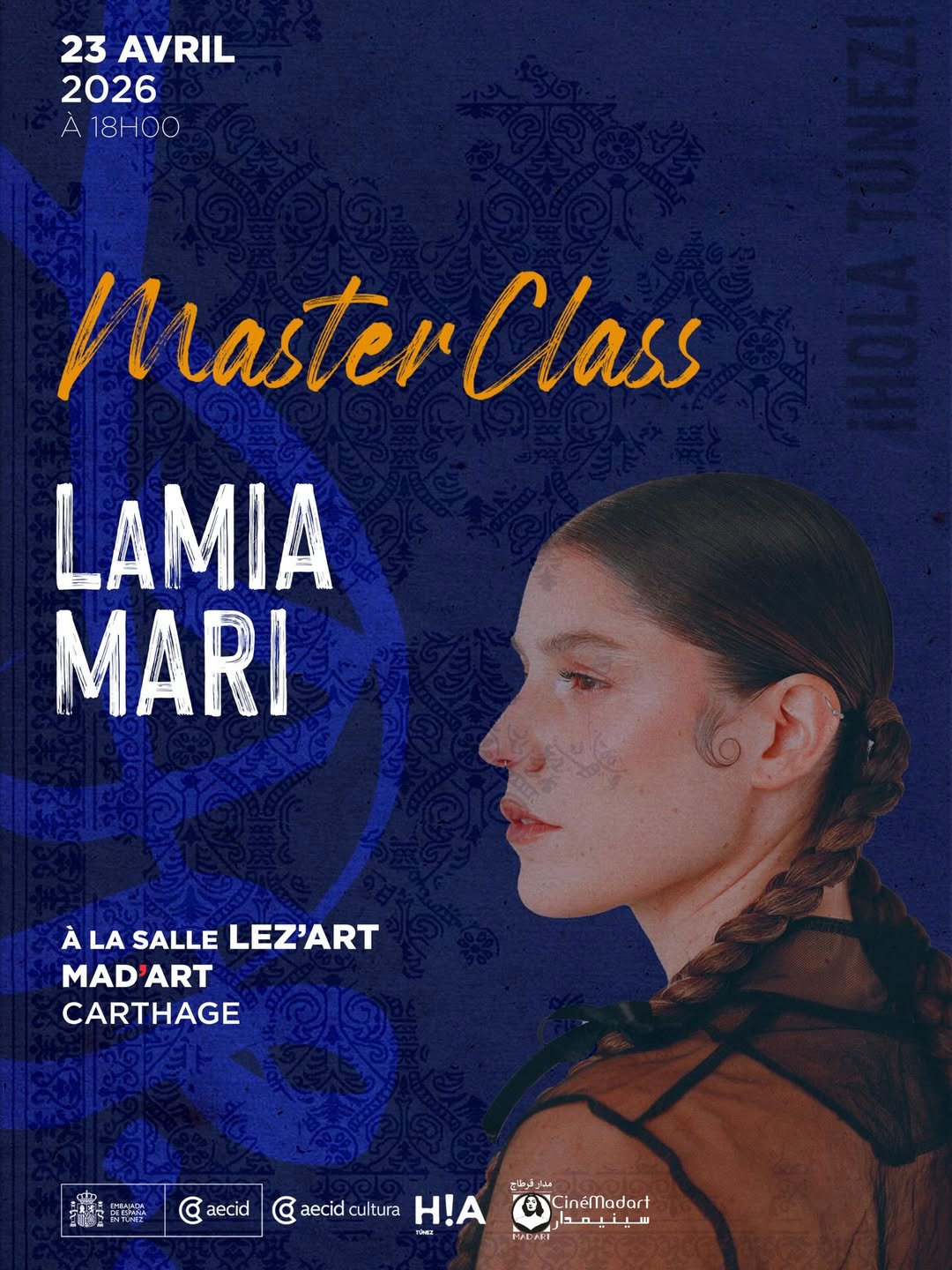
At the center of this initiative is an exclusive masterclass led by Spanish DJ LaMia Mari, scheduled for April 23, 2026, at Lez’art in Carthage. Known for her fluid and energetic sets blending urban, tropical, and African influences, LaMia Mari approaches DJing as a form of dialogue between sounds, geographies, and audiences. This session is conceived not merely as technical training, but as a shared space where artistic practices are exchanged and reinterpreted.
The project extends beyond the workshop itself. Two selected participants will be given the opportunity to perform live the following day, April 24, during the festival’s concert at Lez’art. This immediate transition from learning to stage presence reflects a deliberate approach to anchor emerging talent within a real performance context, where artistic identity is tested and affirmed in front of an audience.
At a time when Tunisia’s electronic music scene continues to evolve and redefine itself, this call acts as both a platform and a catalyst. It highlights a generation of DJs navigating between local musical heritage and global sonic influences, while seeking to articulate distinct and personal sound identities. The festival becomes a point of convergence, a space where these trajectories meet, unfold, and project themselves outward.
Framed within a broader strategy of cultural diplomacy led by Spanish institutions and their partners, ¡Hola Túnez! unfolds simultaneously across several African countries. This multi layered approach reflects an ambition to rethink artistic exchange on a continental scale, positioning music not only as a form of expression, but as a vector of connection and recognition.
Supported by Spanish cooperation in Tunisia, the initiative underscores the role that cultural programs can play when they are rooted in active scenes and lived practices. Here, the call for participation is not a formality, it is an entry point into a process that combines learning, creation, and visibility.
Applications are currently open through an online form, inviting Tunisian DJs to take part in an experience that bridges local energy with international resonance.
Post a Comment