


Where the Wind Comes From, A Film You Can’t Miss
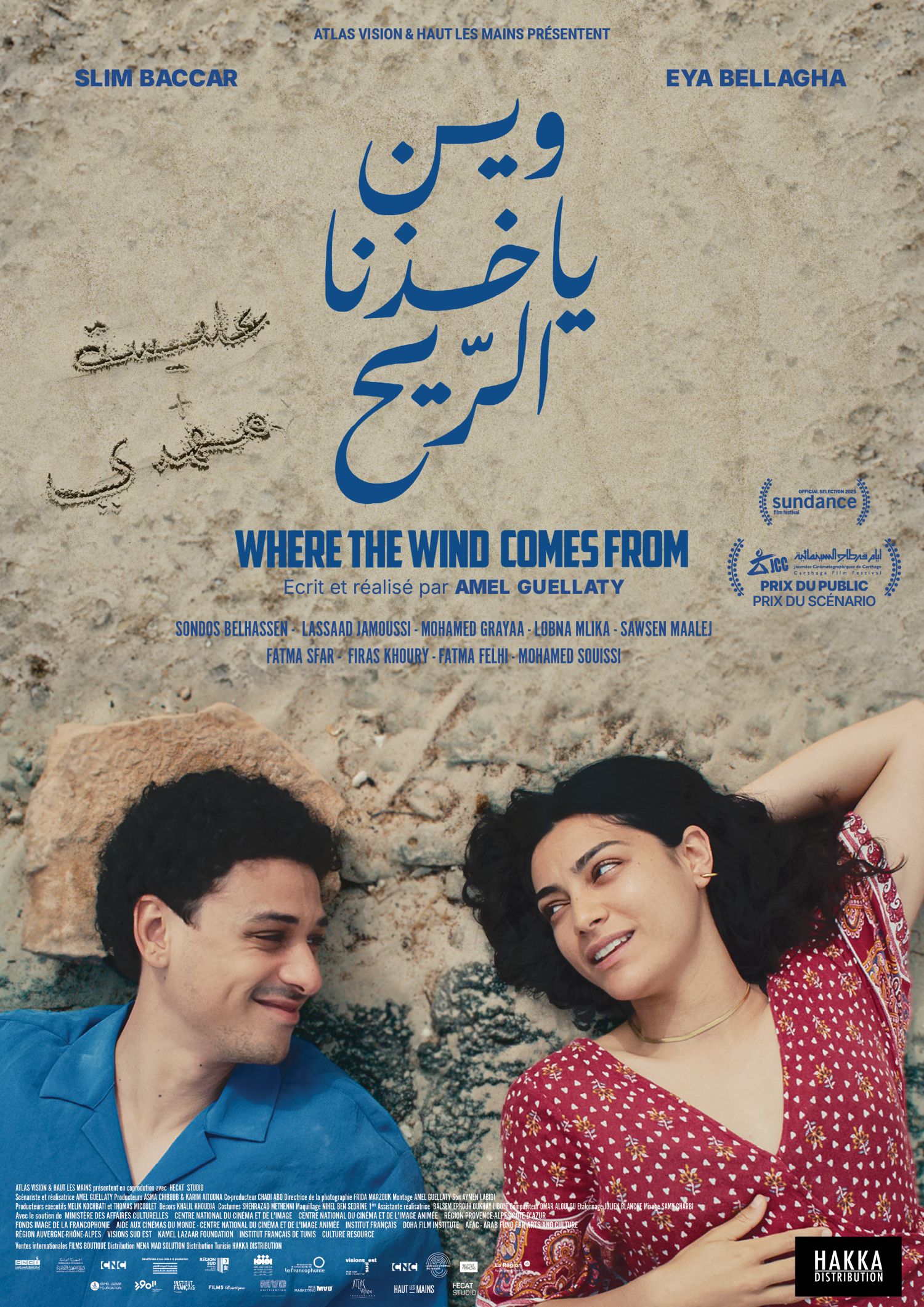
Where the Wind Comes From is a 2025 Tunisian French Qatari co produced feature film written and directed by Amel Guellaty. Presented as a coming of age road movie, the film situates itself within contemporary North African cinema while engaging in a broader transnational conversation on youth, mobility, and artistic aspiration. Its international premiere at the Sundance Film Festival in the World Cinema Dramatic Competition marked the arrival of a distinctive new directorial voice and positioned the film within a global circuit attentive to socially grounded yet formally ambitious works.
The narrative follows Alyssa, a nineteen year old woman driven by defiance and imagination, and Mehdi, her older and more reserved friend, as they embark on a journey across Tunisia toward the island of Djerba. Their trip is motivated by the discovery of an art contest that promises a possible exit from their constrained socio economic reality. This journey functions simultaneously as a physical crossing of territory and as an existential passage through uncertainty, desire, and self definition. The road movie structure allows the film to explore liminality, with the characters suspended between what they are and what they might become, between attachment to place and the impulse to escape.
Guellaty’s screenplay resists melodrama and ideological simplification, favoring instead a tone that oscillates between humor, tenderness, and quiet disillusionment. The dialogue and situations foreground generational frustration without resorting to overt political exposition. Youth is depicted not as a symbol of heroic revolt or tragic despair, but as a fragile state marked by contradiction, impulsiveness, and moments of unexpected grace. In this sense, the film aligns with recent currents in Arab cinema that privilege intimate narratives over didactic frameworks, allowing lived experience to speak for itself.
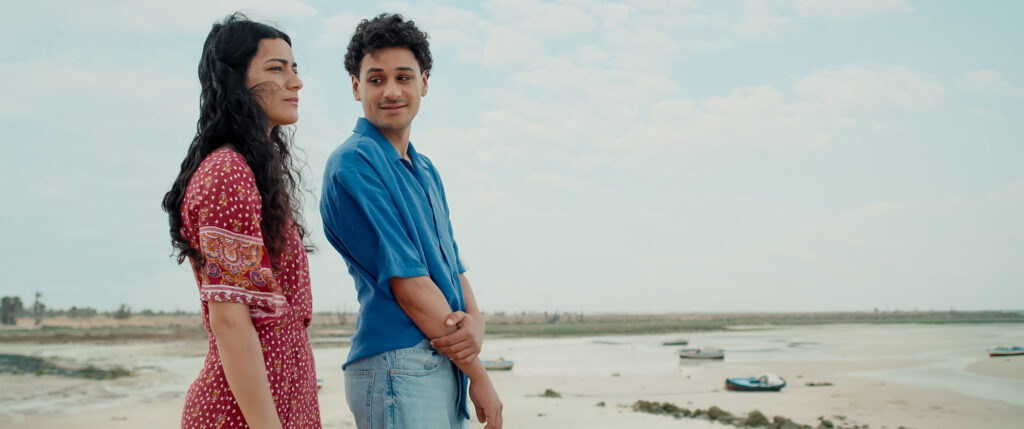
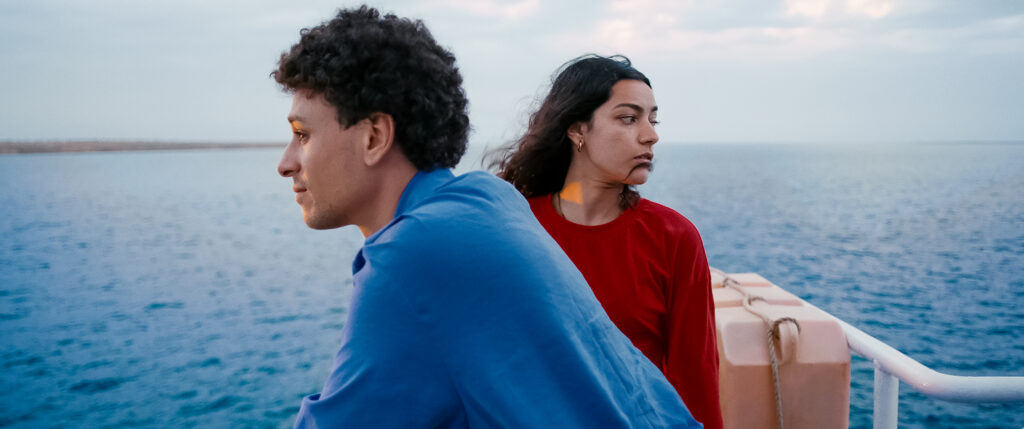
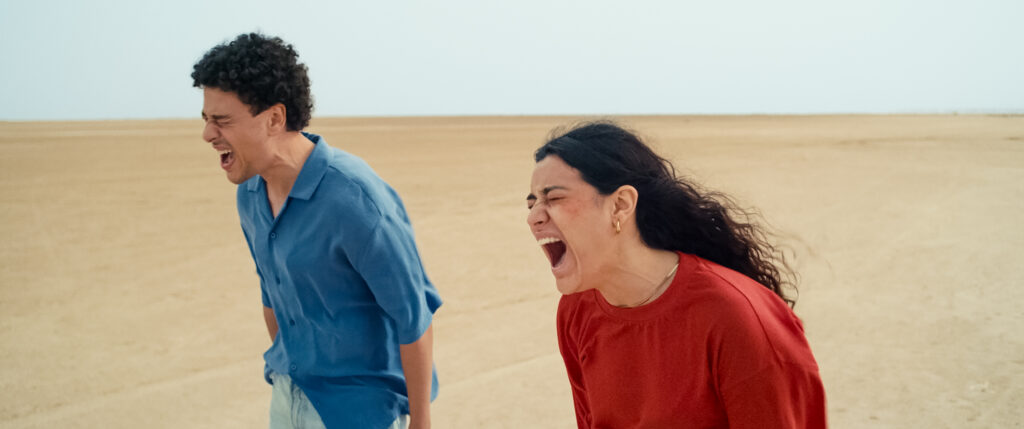
Visually, the film is distinguished by its careful balance between realism and poetic abstraction. Cinematographer Frida Marzouk captures the Tunisian landscape with an attentiveness that avoids both exoticism and bleakness. Urban margins, roadside spaces, and open horizons are framed as zones of possibility and entrapment at once. Intermittent fantasy sequences and playful visual digressions introduce an interior dimension to the narrative, reflecting the protagonists’ imaginative resistance to their circumstances. These moments do not break the realism of the film but rather deepen it, suggesting that imagination is itself a survival strategy.
A central strength of Where the Wind Comes From lies in its performances. Eya Bellagha and Slim Baccar deliver nuanced portrayals that rely on restraint rather than excess. Their chemistry grounds the film emotionally, allowing friendship to emerge as a central ethical and affective axis. The relationship between Alyssa and Mehdi is neither romanticized nor instrumentalized; it is depicted as a shared space of vulnerability, mutual projection, and occasional misunderstanding. This relational focus contributes to the film’s broader reflection on solidarity as a response to precarity.
Critical reception has been largely favorable across international platforms. Reviewers have praised the film’s ability to merge social commentary with formal lightness, noting its refusal to conform to expected narratives about Arab youth. Several critics have highlighted Guellaty’s confident direction, particularly her capacity to integrate tonal shifts without fragmenting the narrative. The film has been described as visually striking and emotionally precise, with particular appreciation for its humane perspective and its understated political resonance.
The film’s success on the festival circuit, including awards at Mediterranean and Arab focused festivals, confirms its resonance beyond its national context. Its circulation within both European and Middle Eastern cultural spaces underscores its hybrid identity as a work rooted in Tunisian reality yet articulated through a cinematic language accessible to international audiences. This dual positioning reflects broader dynamics in contemporary world cinema, where local stories gain visibility through transnational collaboration and distribution.


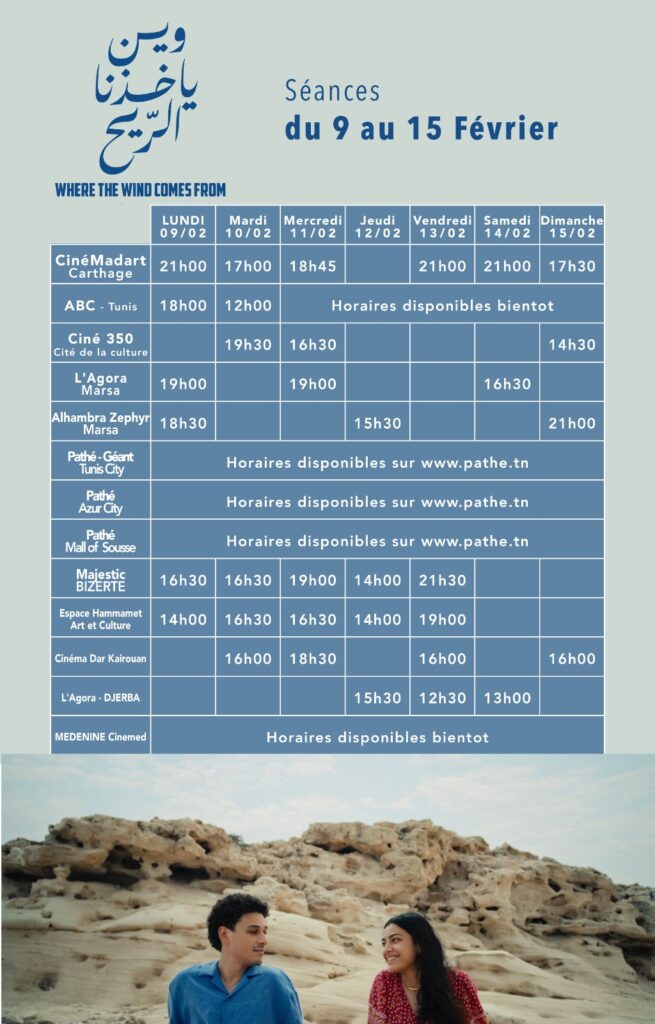
The national tour and distribution strategy of Where the Wind Comes From has been led by Hakka Distribution, a key independent distributor within the Tunisian cinematic landscape known for supporting auteur driven and socially engaged films. Hakka Distribution has positioned the film within a broad cultural circuit that extends beyond conventional theatrical release, emphasizing accessibility, audience engagement, and sustained visibility across the country. This approach reflects a contemporary understanding of film distribution in Tunisia, where circulation increasingly relies on hybrid models combining cinemas, cultural venues, festivals, and alternative screening spaces. It is precisely this wide reaching and inclusive strategy that makes the film impossible to miss, affirming its presence as a shared cultural event rather than a fleeting theatrical release.
General Information
Title: Where the Wind Comes From
Original Title: Tunis–Djerba / Wayn Yakhizna al Riyh
Year: 2025
Countries: Tunisia, France, Qatar
Language: Arabic (Tunisian dialect)
Runtime: 99 minutes
Genre: Drama / Comedy / Road movie
Direction & Writing
Director: Amel Guellaty
Screenplay: Amel Guellaty
Production
Producers:
Asma Chiboub
Karim Aitouna
Chadi Abo (co-producer)
Production Companies:
Atlas Vision Productions
Haut les Mains Productions
Technical Crew
Director of Photography: Frida Marzouk
Editing:
Amel Guellaty
Ghalya Lacroix
Malek Kammoun
Music: Omar Aloulou
Sound: Aymen Labidi
Production Design / Art Direction: Khalil Khoudja
Cast
Eya Bellagha – Alyssa
Slim Baccar – Mehdi
Sondos Belhassen
Lobna Noomene
Lobna Mlika
Lassaad Jamoussi
Fatma Felhi
Fatma Sfar
Oumaima Bahri
Synopsis
Alyssa, a rebellious 19-year-old, and Mehdi, her introverted and artistic friend, feel trapped in their small Tunisian town. When Alyssa discovers an art competition in Djerba that could offer them a way out, they set off on a road trip across Tunisia. Along the way, their friendship is tested as desire for freedom, self-expression, and escape collide with reality.
Festivals and Screenings
World Premiere: Sundance Film Festival – World Cinema Dramatic Competition
International Film Festival Rotterdam
Istanbul International Film Festival
El Gouna Film Festival (Arab World Premiere)
Toronto Arab Film Festival
Mediterranean Film Festival
Awards
Golden Bee – Best Feature Film (Mediterranean Film Festival)
Best Narrative Feature (Toronto Arab Film Festival)
Gouna Star – Best Arab Narrative Film (El Gouna Film Festival)
Post a Comment